
You don't need to understand engines or know the name of a faulty part to explain a car problem to a mechanic. The most helpful approach is to describe what you notice, when it happens, how often it occurs, and whether your vehicle behaves differently.
Maybe your car makes a clicking sound when turning, vibrates at highway speeds, or occasionally struggles to start. These observations can help a technician investigate the problem, even when you aren't sure what's causing it.
At Pearl City Auto Works, we help drivers from Aiea, Pearl City, and surrounding Oahu communities understand vehicle concerns through professional inspection and diagnostics.
This guide explains how to describe common car symptoms, document intermittent problems, and communicate useful information before your appointment.
The Five Details That Help Explain a Vehicle Problem
When describing a vehicle problem, focus on what you experience rather than what you think needs replacing.
Five details can make your description more useful.
1. When the Problem Started
Think about when you first noticed the issue.
Did it begin suddenly, or has it gradually become more noticeable? Did it appear after a recent repair, a long drive, or an extended period without using the vehicle?
These details provide context without necessarily identifying the cause.
2. When the Problem Happens
Explain the driving conditions associated with the symptom.
For example, a vibration might occur only while braking, while accelerating, or when traveling at certain speeds.
A noise that happens while turning may require a different investigation from one that occurs while driving straight.
3. How Often It Occurs
Tell the technician whether the problem happens constantly, occasionally, or under specific conditions.
An intermittent concern can be more difficult to reproduce than a symptom that appears every time the vehicle operates.
Even an approximate frequency can be useful.
4. What You Hear, Feel, or Smell
Use ordinary descriptions.
Words such as clicking, grinding, rattling, shaking, burning, or hesitation help communicate what you're experiencing.
You don't need technical terminology.
5. What Has Changed
Mention whether the problem is getting worse or affecting how the vehicle drives.
For example, a noise that was previously faint but has become louder is useful information.
The same applies to reduced acceleration, changes in steering feel, or unusual braking behavior.
Describing Common Car Symptoms Clearly
Different vehicle problems can produce similar symptoms. Clear descriptions help technicians determine what needs investigation.
Use the following examples when explaining your concern.
| What you notice | A useful description |
|---|
| Clicking while turning | "I hear repeated clicking when making tight turns." |
| Steering-wheel vibration | "The steering wheel shakes at certain highway speeds." |
| Brake noise | "There's a grinding sound when I press the brake pedal." |
| Slow engine starting | "The engine turns over slowly, especially in the morning." |
| Engine hesitation | "The car briefly loses power when I accelerate." |
| Warm A/C airflow | "The A/C blows cool air at first, then becomes warm." |
| Coolant smell | "I notice a sweet smell after driving." |
| Dashboard warning light | "The warning light appears occasionally and then disappears." |
These descriptions identify symptoms, not confirmed diagnoses.
For example, steering-wheel vibration may involve tires, wheels, steering components, or suspension conditions. The cause depends on the vehicle and circumstances.
At Pearl City Auto Works, our services include wheel alignments, steering repair, and suspension repair.
We also provide engine diagnostics and electrical system repair for concerns involving performance, starting, charging, and warning lights.
The important first step is describing the problem accurately.
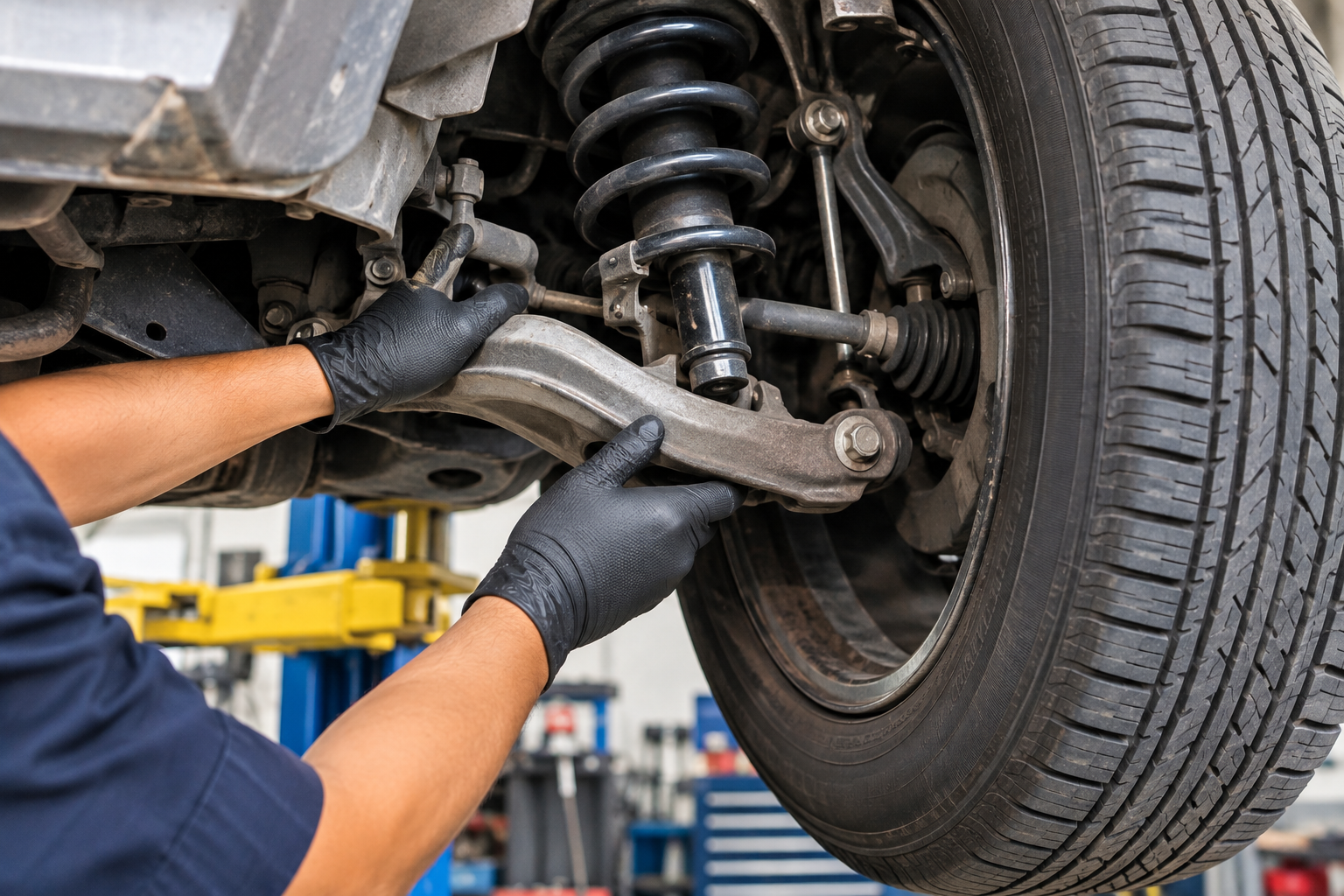
What to Do When a Car Problem Comes and Goes
Intermittent vehicle problems can be frustrating because they may disappear before your appointment.
Your car might hesitate during one commute but operate normally the next day. A warning light may illuminate briefly, then turn off.
These symptoms are still worth documenting.
Keep a Simple Symptom Log
Record the date, approximate time, and driving conditions whenever the problem occurs.
Useful details include:
- Whether the engine was cold or fully warmed up.
- Whether the vehicle was accelerating, braking, turning, or idling.
- Whether the A/C or another electrical accessory was operating.
- Whether a dashboard warning appeared.
- How long the symptom lasted.
For Oahu drivers, it may also help to note whether the issue occurred during stop-and-go traffic, on an uphill road, or while traveling at highway speeds.
These conditions can provide context for diagnosis.
Record the Problem When Safe
A photograph of a dashboard warning or a short recording of an unusual sound may help communicate an intermittent concern.
However, never attempt to photograph, record, or troubleshoot a problem while driving.
Ask a passenger to document it when safe, or record the symptom while the vehicle is safely parked.
A recording cannot replace professional diagnosis, but it may help explain a problem that doesn't occur during an inspection.
Avoid Assuming the Problem Has Disappeared
A symptom that stops temporarily doesn't necessarily mean the underlying condition has resolved.
Some mechanical and electrical problems appear only under particular operating conditions.
If the concern continues or returns, arrange an evaluation.
What Not to Assume Before a Mechanic Checks Your Car
It's natural to search online when your vehicle starts behaving differently.
However, similar symptoms can have several causes.
A slow-starting engine doesn't automatically mean the battery needs replacement. A clicking sound doesn't always identify one specific suspension component.
Even diagnostic trouble codes require interpretation.
For example, a check engine light may be associated with a sensor reading, but that doesn't necessarily mean the sensor itself has failed.
A technician may need additional testing to determine what's affecting the system.
Describe the Symptom Instead of Requesting a Specific Part
Rather than saying, "I need a new alternator," explain that your vehicle struggles to start or that you've noticed an electrical warning.
This gives the technician useful information without narrowing the investigation prematurely.
If another shop has already diagnosed the problem, bring the findings or repair recommendation.
That information may provide context, although an independent evaluation may still be necessary.
Recognize Symptoms That Require Prompt Attention
Some vehicle problems shouldn't wait for a routine appointment.
If your brakes lose effectiveness, the engine overheats, smoke appears, or steering control becomes compromised, stop driving when safe and arrange appropriate assistance.
A flashing check engine light can also indicate a serious condition requiring prompt evaluation.
When you're uncertain whether the vehicle is safe to drive, seek professional guidance before continuing.
How We Use Your Information During Diagnosis
At Pearl City Auto Works, we use the information you provide as part of understanding your vehicle's concern.
The appropriate inspection or diagnostic process depends on the symptoms and systems involved.
For example, an engine performance problem may require different testing from an intermittent electrical concern or a steering vibration.
Our services include computer diagnostics, engine repair, electrical troubleshooting, brake repair, cooling-system service, and other maintenance and repair work.
Inspection and Diagnostic Testing
We offer a Free Courtesy Check Over by appointment, using AutoVitals digital inspection technology.
This courtesy visual inspection is separate from diagnostic testing needed to identify specific vehicle problems.
For check engine light diagnostics, we charge diagnostic time in increments rather than applying one flat fee to every situation.
If further testing is necessary, we explain the associated cost before proceeding.
Understanding the Findings
After evaluating the concern, we explain our findings and discuss recommended work.
Some problems can be identified through an initial evaluation. Others require further investigation, particularly when symptoms are intermittent.
We do not perform additional repairs without your authorization.
View Auto Repair and Maintenance ServicesRequest an AppointmentWhat Local Oahu Drivers Are Saying
Clear communication can help customers understand their vehicle's condition and recommended repairs.
Here are two reviews published on our website.
"The service here is great and the work done was beyond my expectations."
Keemoe007, Local Customer
"Honest mechanics that try to find the best deal on parts, not just go straight to the dealer."
Jacob Wernicke, Local Customer
These comments reflect individual customer experiences. We encourage you to explain your concerns and ask questions about recommended work.
Get Help Understanding Your Vehicle's Symptoms
You don't need to identify the faulty component before contacting a mechanic.
Describing what you've noticed, when it occurs, and how your vehicle behaves gives technicians a useful starting point for investigating the concern.
At Pearl City Auto Works, we provide automotive diagnostics, maintenance, and repair services at our Aiea shop.
We're a second-generation, family-owned business serving Aiea, Pearl City, and surrounding Oahu communities.
Visit us at 98-025 Hekaha St, Aiea, HI 96701, or contact our team to discuss your vehicle.
CONTACT US TODAY!BOOK A NO-CONTACT APPOINTMENT