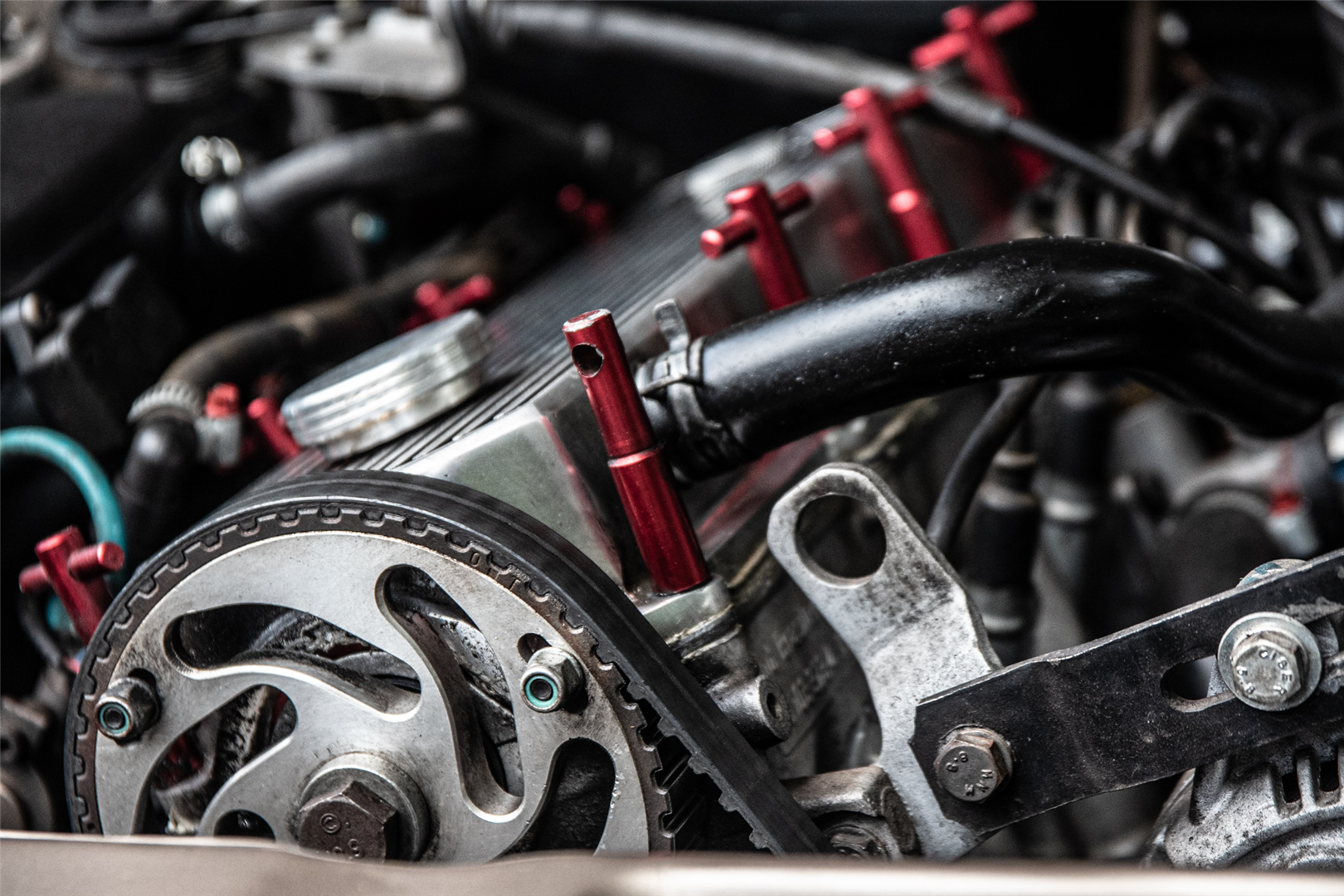
A timing belt is a reinforced rubber drive belt that synchronizes the rotation of your engine’s crankshaft and camshafts, ensuring that the engine’s intake and exhaust valves open and close at exact microsecond intervals relative to piston movement. When a timing belt snaps or strips its rubber teeth while the engine is running, the mechanical synchronization fails instantly, causing severe internal component collision and catastrophic engine damage on interference engine designs.
At Pearl City Auto Works, we help vehicle owners avoid sudden engine failure through proactive timing belt maintenance and inspection. Serving drivers in Aiea and surrounding communities, our certified technicians perform complete timing component replacements using high-grade original equipment parts to keep your vehicle running smoothly and dependably.
5 Warning Signs Your Timing Belt Is Worn or Slipping
Unlike serpentine drive belts that are easily visible under the hood, timing belts are housed behind sealed protective engine covers. Catching these subtle indicators early prevents total belt failure on the road:
- High-Pitched Ticking or Rattling Noises: A worn timing belt or failing belt tensioner produces a distinct metallic ticking sound coming from the front of the engine housing.
- Engine Misfires and Rough Idling: Slipping or stretched belt teeth alter valve timing slightly, causing improper air-fuel mixture ignition and noticeable engine stumbling.
- Hard Starting or Engine Hesitation: Incorrect valve timing delays cylinder compression, forcing the starter motor to crank longer before the engine fires.
- Visible Oil Leaks Near the Timing Cover: Leaking camshaft or crankshaft front seals drip oil directly onto the rubber belt, rapidly softening the compound and causing tooth shear.
- Exhaust Smoke and Excessive Emissions: Misfiring cylinders caused by improper timing dump unburned fuel into the exhaust manifold, producing heavy exhaust vapor.
Critical Mechanical Note: Unlike other drive belts that squeal loudly when loose, a timing belt can snap suddenly without any prior audible warning. Following your manufacturer's mileage replacement interval is the only guaranteed protection against catastrophic valve failure.
Interference vs. Non-Interference Engines: Understanding the Risk
The severity of a snapped timing belt depends heavily on your vehicle’s internal engine architecture:
| Engine Design Type | Valve & Piston Clearance | Snapped Belt Consequence | Typical Repair Outcome |
|---|
| Interference Engine | Minimal clearance; valves extend into piston travel path | Pistons strike open valves at high speed | Bent valves, damaged pistons, destroyed cylinder head |
| Non-Interference Engine | Adequate clearance; valves do not cross piston path | Engine shuts down safely without internal impact | Replace timing belt, re-time engine, resume driving |
Why You Should Replace the Water Pump and Tensioners Together
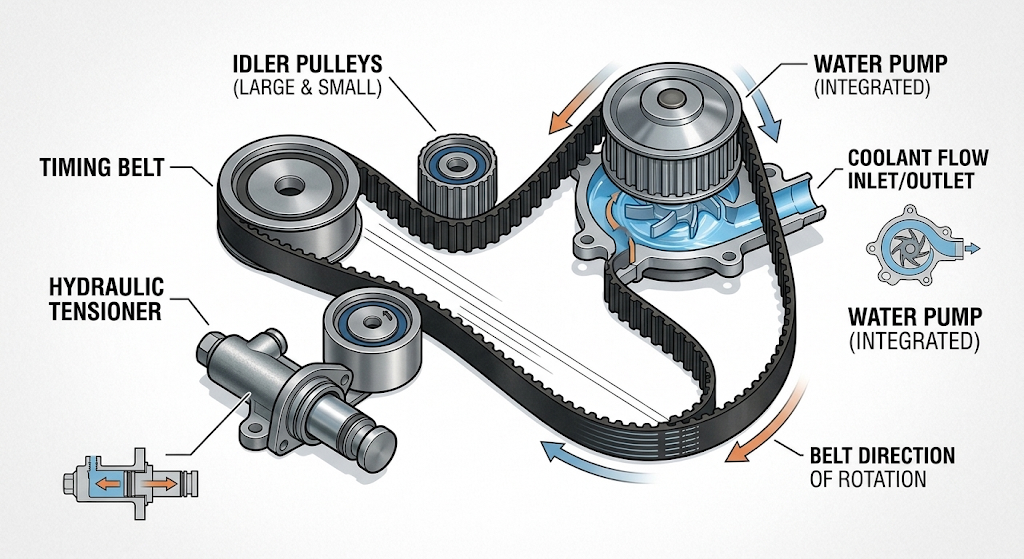
When servicing a timing belt, replacing adjacent internal timing components at the exact same time is standard automotive best practice:
1. Shared Labor Overhead
On most overhead camshaft engines, the water pump, tensioner pulley, and idler bearings sit directly behind the timing belt inside the front timing housing. Because accessing these parts requires removing drive belts, harmonic balancers, and protective covers, replacing the water pump during timing belt service incurs zero additional disassembly labor.
2. Preventing Secondary Component Failure
A fresh timing belt exerts higher tension than a stretched, worn belt. Installing a new high-tension belt over an old water pump bearing or worn idler pulley often causes the aging bearing to fail shortly after service, requiring a second full teardown.
The Pearl City Auto Works Timing Belt Replacement Process
Replacing a timing belt demands precise mechanical accuracy. Misaligning timing marks by even a single gear tooth causes severe engine misfires or valve contact.
Our Thorough 5-Step Timing Component Service
- Digital Inspection & Diagnostic Scan: We perform a comprehensive digital multi-point inspection, evaluating overall belt condition, drive pulley wear, and scanning for related engine timing fault codes.
- Access & Component Disassembly: Our certified technicians remove outer serpentine drive belts, engine covers, and harmonic balancers during our Timing Belt Service & Repair to expose the sealed timing assembly.
- Timing Alignment & Component Removal: We rotate the crankshaft to top dead center (TDC), lock the camshaft sprockets in place, and carefully remove the worn timing belt, tensioner pulley, and water pump.
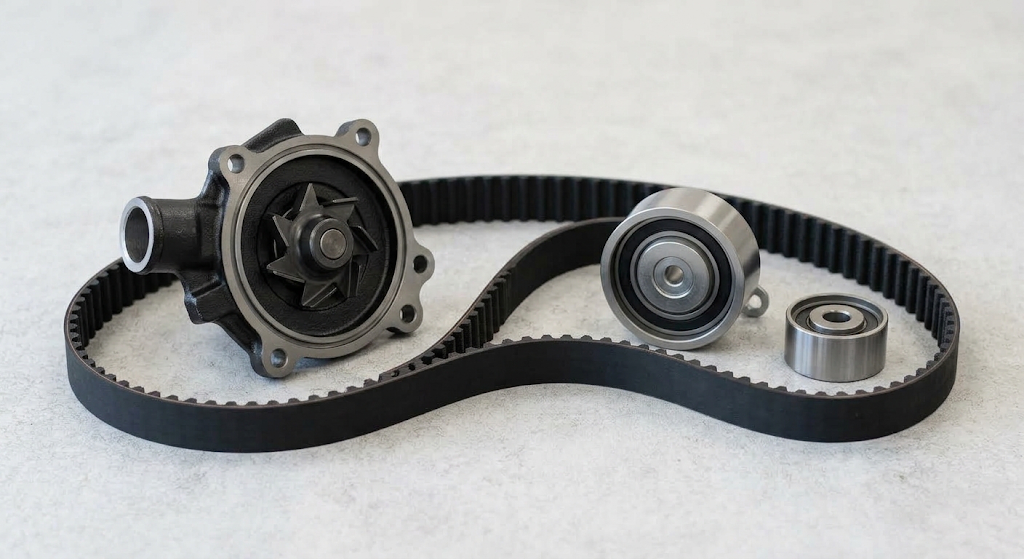
- Complete Kit Installation: We install a fresh timing belt kit complete with a new water pump, tensioner pulley, idler bearings, and front crankshaft seals during dedicated engine repair and maintenance.
- Precision Tensioning & Road Testing: We set precise belt tension to factory specifications, hand-rotate the engine to verify timing alignment marks, and perform a road test to ensure smooth performance.
VIEW LIST OF SERVICES
Replacing worn timing components on schedule prevents catastrophic internal engine failure on island roads. Review our current auto repair coupons to discover promotional offers on timing belt packages and preventive engine maintenance before booking your appointment.
Driving Conditions That Accelerate Timing Belt Degradation
While timing belts are typically rated for 60,000 to 100,000 miles under normal driving conditions, severe environmental factors shorten rubber lifespan. High ambient temperatures, frequent stop-and-go commuting, and atmospheric moisture accelerate rubber oxidation. Furthermore, leaking oil or coolant dripping onto the belt rapidly degrades the synthetic rubber compound, causing teeth to strip under engine load.
According to technical specifications from the Automotive Maintenance Council, replacing a timing belt at recommended intervals is a fraction of the cost of rebuilding an engine damaged by valve-piston collision. Additionally, certified technician standards published by the National Institute for Automotive Service Excellence (ASE) emphasize that complete timing component replacement ensures reliable engine operation and preserves long-term resale value.
What Local Drivers Are Saying
We take pride in providing precise mechanical repairs, transparent digital reporting, and dependable customer care to vehicle owners in Aiea and surrounding areas. Here is feedback shared by our local customers:
"Pearl City Auto Works handled my major service timing belt replacement with complete professionalism. The photo inspection report was impressive and pricing was clear from the start!"
Gordon, Local Customer
"Shay and the mechanics did an amazing job on my vehicle. Honest communication, fair rates, and excellent turnaround time. Highly recommend!"
Janice, Local Customer
Frequently Asked Questions
How often should a timing belt be replaced?
Most vehicle manufacturers recommend replacing the timing belt every 60,000 to 100,000 miles or every 6 to 7 years, whichever comes first. Review your vehicle owner's manual or ask our technicians for your exact factory maintenance schedule.
What is the difference between a timing belt and a timing chain?
A timing belt is made of reinforced synthetic rubber and requires periodic scheduled replacement. A timing chain is made of tempered steel, runs inside the engine lubricated by motor oil, and is designed to last the life of the engine under normal maintenance.
What happens if my timing belt snaps while driving?
If your timing belt snaps while driving, the engine will stop running instantly. On an interference engine, the pistons will collide with open valves, causing extensive internal damage that often requires replacing the cylinder head or the entire engine assembly.
Can I visually inspect my timing belt to see if it is good?
While a visual inspection can reveal severe cracks, fraying edges, or oil contamination, a timing belt can look perfectly fine on the outside while its internal structural cords are fatigued. Adhering to mileage intervals is far safer than relying on visual checks alone.
Why does replacing a timing belt take several hours?
Replacing a timing belt involves removing drive belts, engine mounts, harmonic balancers, and protective covers to access the front of the engine block, followed by precise gear alignment and coolant system bleeding.
Schedule Your Engine Maintenance Today
Do not risk catastrophic engine failure by neglecting your timing belt. Our experienced team at Pearl City Auto Works is ready to inspect, diagnose, and service your engine with clear digital updates at every step.
CONTACT US TODAY!BOOK A NO-CONTACT APPOINTMENT