Crawling along the H-1 freeway during the afternoon commute tests the patience of any Oahu driver. Stop-and-go traffic is an unavoidable reality of island living. While you sit comfortably in your air-conditioned cabin listening to the radio, your vehicle is working incredibly hard just to stay still. An engine operating at idle generates a massive amount of heat.
Many drivers panic when they notice their engine temperature gauge creeping toward the red zone, especially if the vehicle drives perfectly fine at highway speeds. This specific symptom—overheating only when stopped or moving slowly—points to a distinct failure in how your vehicle manages thermal energy. Understanding the mechanics of your cooling system reveals why heavy traffic is the ultimate stress test for your engine and what you must do to prevent a catastrophic breakdown on the highway.
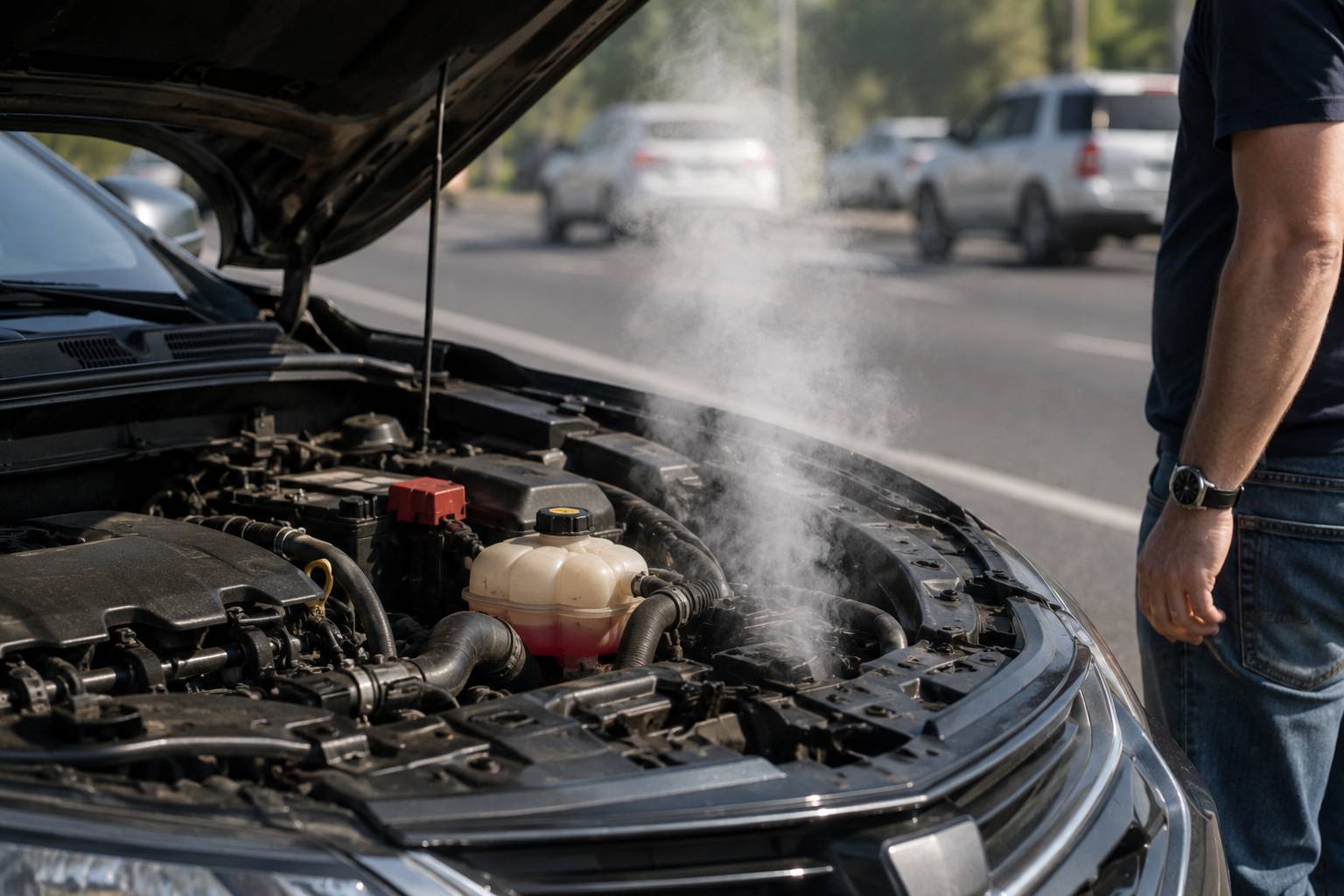
The Physics of Cooling an Idle Engine
An internal combustion engine produces thousands of controlled explosions every minute. This process creates extreme heat that must be dissipated rapidly to prevent the metal engine block from melting. The cooling system circulates a liquid coolant mixture through channels inside the engine block. The coolant absorbs the heat and carries it to the radiator located at the front of the vehicle.
When you drive at 60 MPH, massive volumes of outside air ram through the front grille and pass over the metal fins of the radiator. This "ram air" effect rapidly cools the liquid inside, which then cycles back into the engine.
When you are stuck in bumper-to-bumper traffic, the ram air effect drops to zero. The vehicle must rely entirely on its secondary cooling mechanism: the electric radiator cooling fan.
Failing Radiator Cooling Fans
The electric cooling fan is mounted directly behind the radiator. When the engine computer detects the coolant temperature rising above a specific threshold, it activates the fan. The fan blades physically pull outside air through the radiator grille to simulate highway speeds.
If your vehicle only overheats in traffic, a failing radiator fan is the most probable culprit. The electric fan motor can burn out from years of heavy use. The electronic relay that switches the fan on can short out. If the fan fails to engage, the heat remains trapped in the radiator. The coolant boils, the pressure spikes, and your engine rapidly overheats. The moment you start moving fast enough to force air back through the grille, the temperature gauge will begin to drop.
Low Coolant Levels and Hidden Leaks
Your engine cannot regulate its temperature without an adequate volume of liquid coolant. Coolant, commonly referred to as antifreeze, raises the boiling point of water and prevents internal rust.
The cooling system operates under extreme pressure. Over time, the intense heat bakes the rubber hoses that transport the fluid. These hoses become brittle and develop microscopic cracks. The plastic end tanks on modern radiators are also prone to splitting along their seams. These leaks allow coolant to escape slowly. Once the fluid level drops too low, air pockets form inside the engine block. These air pockets create localized "hot spots" that cause the engine to overheat violently when idling.
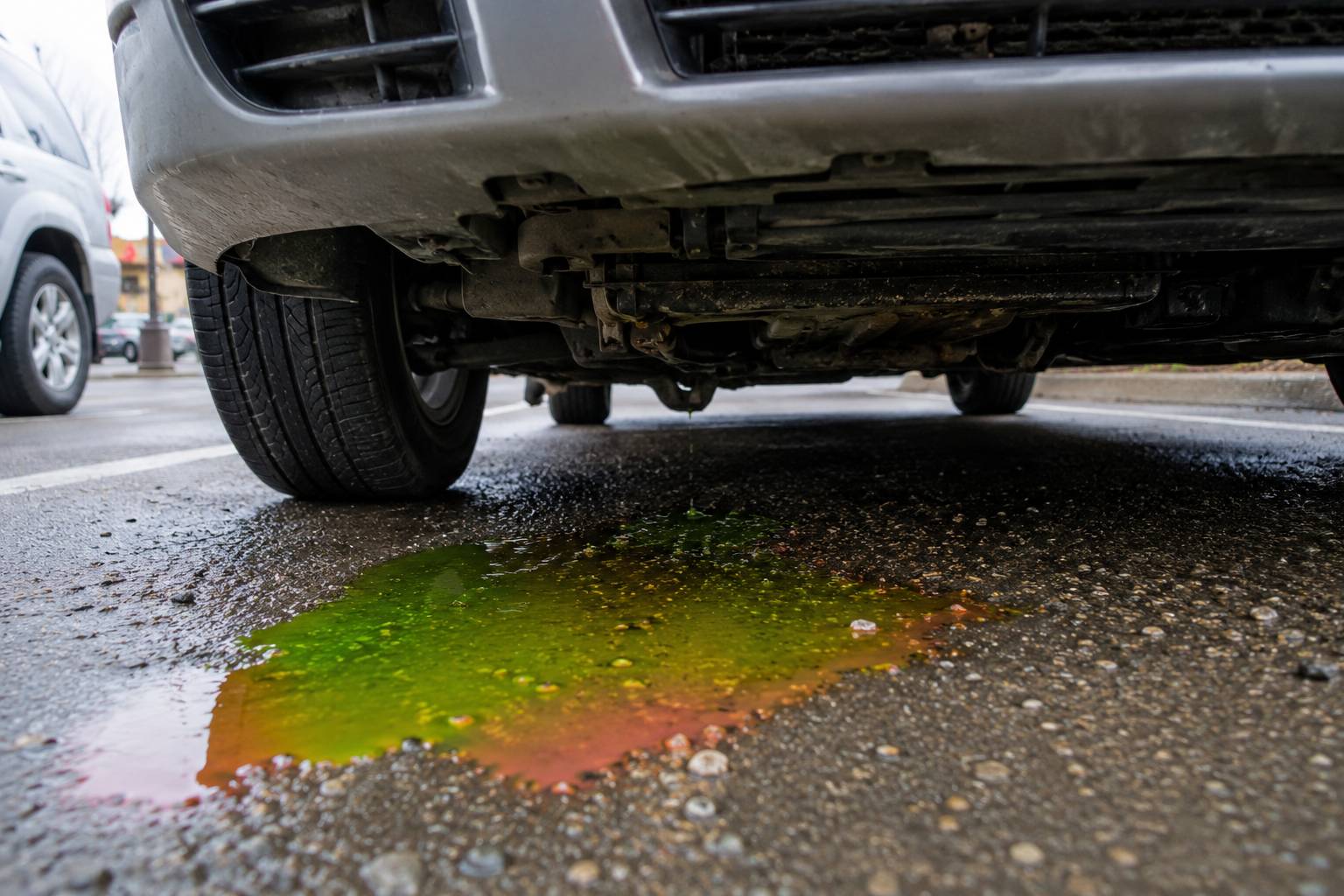
A green, orange, or pink puddle under your car indicates a dangerous coolant leak..
A Failing Water Pump
The water pump acts as the mechanical heart of the entire cooling system. It utilizes a spinning metal or plastic impeller to force the coolant through the engine block and into the radiator.
The impeller blades can physically erode away over thousands of miles. The internal bearing of the pump can also fail, causing coolant to weep out of a designated "weep hole" on the housing. If the water pump cannot circulate the fluid fast enough, the coolant sits stagnant inside the hot engine block. The heat overwhelms the system quickly, especially when the engine lacks the benefit of high-speed airflow.
Diagnosing Overheating Symptoms
Paying attention to the exact circumstances of your overheating engine helps technicians pinpoint the failing component. Use this diagnostic table to understand the severity of your situation.
| Overheating Symptom | Likely Mechanical Cause | Immediate Action |
|---|
| Overheats only in stop-and-go traffic | Dead radiator cooling fan or faulty fan relay. | Turn off AC and turn on the heater. |
| Overheats at highway speeds | Clogged radiator, failing water pump, or stuck thermostat. | Pull over safely and shut off engine. |
| Sweet smell of maple syrup in cabin | Coolant leaking from the heater core inside the dashboard. | Schedule a diagnostic inspection. |
| White smoke pouring from tailpipe | Blown head gasket allowing coolant into the combustion chamber. | Tow vehicle immediately. Do not drive. |
| Bright green or pink puddle under car | Cracked radiator, split hose, or leaking water pump. | Check coolant reservoir level before driving. |
What to Do When the Temperature Gauge Spikes
If you are stuck in traffic and watch your temperature gauge climb into the red zone, you must take immediate action to protect the engine.
First, turn off your air conditioning system. The AC compressor places a heavy mechanical load on the engine and generates additional heat.
Second, roll down your windows and turn your vehicle's heater on to the absolute maximum setting. This sounds counterintuitive on a hot Hawaii day, but it works. The heater core under your dashboard acts as a secondary miniature radiator. Blasting the heat pulls thermal energy directly away from the engine block and vents it into the passenger cabin. This temporary trick can buy you enough time to safely exit the highway.
Most importantly, never open the radiator cap while the engine is hot. The system is highly pressurized. Opening a hot cap will cause superheated, boiling coolant to erupt violently, causing severe, life-altering burns.
Frequently Asked Questions About Engine Overheating
Can I just pour plain water into my radiator if I'm overheating? You should only use plain water in an absolute emergency to get the vehicle to a safe location. Plain water boils at 212 degrees Fahrenheit, which is much lower than the operating temperature of a modern engine under load. Water also causes the internal cast iron components of your engine to rust rapidly. You must have a mechanic flush the water and replace it with a proper 50/50 coolant mix as soon as possible.
Is it safe to drive with the temperature gauge in the red if I'm almost home? No. Driving an actively overheating vehicle for even five minutes can warp the aluminum cylinder head or blow the head gasket. These are catastrophic mechanical failures that cost thousands of dollars to repair. Pulling over safely and calling a tow truck is always the cheaper option.
How often should I flush my engine coolant in Hawaii? The constant heat of the Oahu climate breaks down the chemical additives in your coolant faster than in cooler regions. The American Automobile Association (AAA) and most manufacturers recommend a complete cooling system flush every 30,000 to 50,000 miles to prevent internal corrosion and maintain a high boiling point.
Why does turning on my AC make the car overheat faster in traffic? The AC condenser sits directly in front of your engine radiator. When you run the AC, the condenser gets extremely hot. The radiator cooling fan must now pull air through the hot condenser before it reaches the radiator. This means your radiator is trying to cool the engine using air that has already been heated, drastically reducing its efficiency.
If my coolant level is full, why is my car still overheating? A full coolant reservoir does not guarantee a functioning system. You could have a thermostat stuck in the closed position, which physically blocks the coolant from flowing into the radiator. You could also have a dead water pump or a burnt-out electrical cooling fan.
What Local Oahu Drivers Are Saying
"Been going to this place for service for over 15 years. If you are looking for an honest and trustworthy repair shop to fix up whatever ails your car at a reasonable price, look no further. Their mechanics are the best and very knowledgeable and do a great job. I wouldn't think of taking my two cars anywhere else for service. Thank you all, you are the best."
- Thomas Arnone, Local Customer
"Honest mechanics that try to find the best deal on parts, not just go straight to the dealer. I had a vehicle I took to three other shops and no one knew what was wrong. I thought it was going to cost me over a thousand dollars, but they figured it out and it was just a hundred. I also have brought it in for one thing and they figured out something cheaper. I only recommend this place."
- Jacob Wernicke, Local Customer
Expert Cooling System Repair in Pearl City
An overheating engine is one of the most stressful experiences a driver can face. Guessing which component is failing often leads to unnecessary parts replacement and repeat breakdowns. Protecting your engine from severe thermal damage requires precision diagnostics and professional-grade replacement components.
The ASE-certified technicians at Pearl City Auto Works utilize advanced pressure testing equipment to locate microscopic coolant leaks hidden deep within your engine bay. We test the electrical draw of your radiator cooling fans and verify that your water pump is flowing at the correct factory specified volume. Stop nervously watching your temperature gauge during your daily commute. Schedule a comprehensive Cooling System Service and Repair today and let our team ensure your vehicle is ready to handle Oahu traffic safely.
Book a no contact appointment