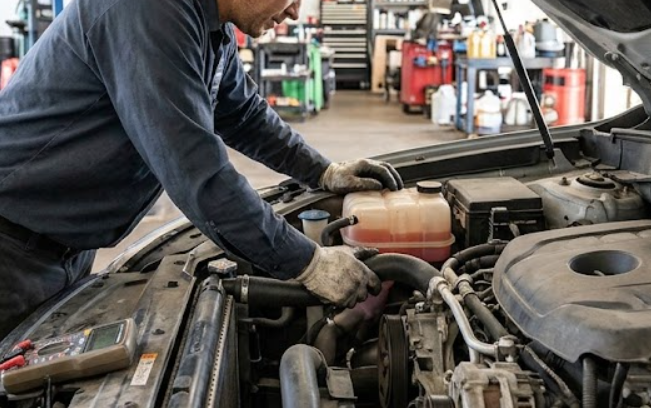
You notice a puddle beneath your parked car or discover that the coolant level is lower than expected. But when you drive, the temperature gauge looks normal, and your engine doesn't seem to be overheating.
Does that mean the leak isn't serious?
Not necessarily. A car can lose coolant without showing immediate signs of overheating. The cooling system may still have enough fluid to regulate engine temperature temporarily, or the leak may only occur under certain conditions.
At Pearl City Auto Works, we help drivers in Aiea, Pearl City, and surrounding Oahu communities investigate cooling-system problems. If you've noticed disappearing coolant, an unusual smell, or a suspicious puddle, understanding the possible causes can help you decide what to do next.
Here's what coolant loss may indicate, how to recognize warning signs, and when professional diagnosis is important.
Why Your Car Can Leak Coolant Without Overheating
Your vehicle's cooling system circulates coolant through the engine and radiator to help regulate operating temperature.
When coolant escapes, the temperature gauge may not immediately show a problem.
Several factors can explain this:
- The leak is small. The system may still contain enough coolant to regulate temperature during normal driving.
- The leak is intermittent. Coolant may escape only when the engine reaches operating temperature and pressure increases.
- The vehicle hasn't been driven long enough. A short trip may not reveal a developing cooling-system problem.
- The leak occurs after parking. Some leaks become noticeable as the engine cools and components contract.
A normal temperature reading doesn't prove the cooling system is functioning correctly. Depending on the vehicle, the dashboard gauge may not display every temperature fluctuation.
If coolant continues to disappear, the cause should be investigated before the engine begins overheating.
Common Causes of Coolant Leaks
Several components can develop leaks as seals, hoses, and other materials age or become damaged.
Worn or Damaged Radiator Hoses
Radiator hoses carry coolant between the engine and cooling-system components.
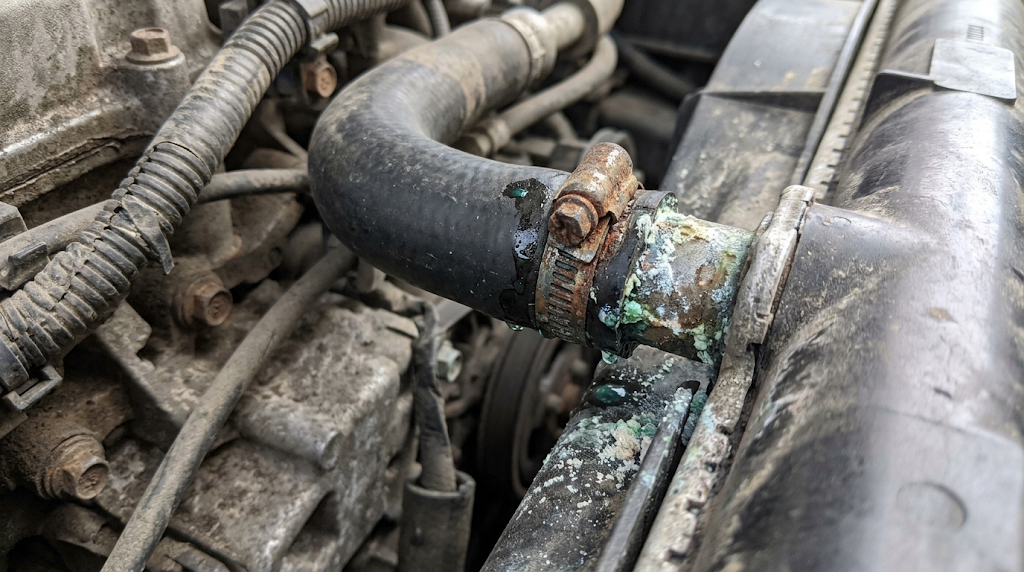
Over time, hoses may crack, soften, swell, or develop leaks near their connections. A loose or deteriorated hose clamp can also allow coolant to escape.
You might notice dried coolant residue around a connection or a small puddle after parking.
Radiator Leaks
The radiator helps release heat from the coolant as it circulates through the system.
Damage, corrosion, or deterioration around the radiator's seams and connections can allow coolant to escape.
Some radiator leaks are visible, while others become apparent only when the cooling system is pressurized.
Water Pump Leaks
The water pump circulates coolant through the engine and cooling system.
A failing seal or damaged pump housing may allow coolant to leak. Depending on the vehicle's design, coolant residue may appear near the front or side of the engine.
A water pump problem can eventually affect coolant circulation, making timely diagnosis important.
Coolant Reservoir or Pressure Cap Problems
The coolant reservoir holds coolant as its volume changes with temperature.
A cracked reservoir or faulty pressure cap may allow coolant to escape. Some problems occur only when the cooling system reaches operating temperature.
The reservoir's location and design vary by vehicle, so visible coolant near it doesn't always identify the exact source.
Thermostat Housing and Gasket Leaks
The thermostat helps regulate coolant flow based on engine temperature.
Although the thermostat itself isn't necessarily leaking, its housing or sealing gasket can develop a leak.
Coolant may collect around the housing or travel along nearby engine components before reaching the ground.
Because coolant can run across other surfaces, the location of a puddle doesn't always reveal where the leak began.
Coolant Leak vs. A/C Condensation: How to Tell the Difference
Finding liquid beneath your car doesn't automatically mean there's a coolant leak.
In Hawaii's warm, humid conditions, air-conditioning systems can produce noticeable condensation. Water may drip beneath the vehicle after the A/C has been running.
Here's how the two may differ:
| What to check | A/C condensation | Possible coolant leak |
|---|
| Appearance | Usually clear and watery | May be colored, although coolant color varies |
| Smell | Generally little or no odor | May have a sweet or chemical smell |
| When it appears | Often after using the A/C | May appear while parked, after driving, or as the engine cools |
| Coolant reservoir level | Should not be affected | May gradually decrease |
Never identify a fluid by tasting it. Coolant can be toxic to people and animals.
If you're unsure what the liquid is, avoid touching it unnecessarily. A technician can inspect the vehicle and help determine whether it's normal condensation or a fluid leak.
Warning Signs That Coolant Loss Needs Attention
A visible puddle isn't the only sign of a cooling-system problem.
Other symptoms may include:
- A coolant reservoir level that repeatedly drops.
- A sweet or unusual smell around the engine compartment.
- Dried, crusty residue near hoses or cooling-system connections.
- Steam coming from beneath the hood.
- A rising temperature gauge or overheating warning.
- Unusual changes in cabin heater performance.
Some of these symptoms can have causes unrelated to coolant loss, so they should be evaluated together rather than treated as a definitive diagnosis.
Can You Keep Driving if the Temperature Gauge Is Normal?
A normal gauge reading doesn't guarantee that driving is safe.
A small leak can worsen unexpectedly, and a sudden loss of coolant may cause engine temperature to rise rapidly.
If you notice an overheating warning, steam, or a rapidly increasing temperature reading, pull over somewhere safe and turn off the engine.
Never remove a radiator cap or pressurized coolant reservoir cap while the engine is hot. Hot coolant and steam can cause serious burns.
If coolant is leaking significantly or you cannot determine whether the vehicle is safe to operate, arrange appropriate assistance rather than continuing to drive.
What You Can Safely Check Before Scheduling Service
You can gather useful information about a possible coolant leak without taking apart the cooling system.
Check the coolant reservoir when the engine is completely cool.
If your vehicle has a translucent reservoir with minimum and maximum markings, observe whether the coolant level is within the specified range. Follow your owner's manual for the correct checking procedure.
Look for puddles where you park.
Note where the liquid appears beneath the vehicle and whether it occurs after driving or after the vehicle has been parked overnight.
Watch for warning lights or temperature changes.
If the dashboard displays a cooling-system warning or the temperature begins rising unexpectedly, stop driving when safe.
Notice when the problem occurs.
Does the smell appear after driving? Is coolant visible only when the engine has warmed up? These observations may help during diagnosis.
Avoid opening pressurized components, handling hot hoses, or adding an unidentified fluid to the cooling system. Different vehicles require specific coolant formulations.
If the reservoir is empty or the coolant level is significantly below the recommended range, don't assume the vehicle is safe to drive simply because the gauge previously appeared normal.
How Cooling-System Leaks Are Diagnosed
Finding the source of a coolant leak isn't always as simple as locating a puddle.
Coolant can travel along engine components before dripping onto the ground. Some leaks occur only when the system is warm or under pressure.
Depending on your vehicle and symptoms, identifying coolant loss may involve examining hoses, connections, the radiator, reservoir, water pump, and other cooling-system components. Additional testing may be needed when the source isn't immediately visible.
If no external leak is found, further investigation may be necessary to determine whether coolant is being lost internally.
At Pearl City Auto Works, our Cooling System Service and Repair addresses coolant leaks, radiator problems, water pump concerns, thermostat issues, and other cooling-system faults.
We also provide Engine Diagnostics and Repair when symptoms suggest a related engine-performance concern.
Our goal is to identify the underlying problem and explain the recommended repairs before work proceeds. We do not perform additional repairs without your authorization.
Schedule Cooling-System Service at Pearl City Auto Works
A coolant leak may seem minor when your engine temperature remains normal, but continuing coolant loss deserves attention.
Addressing the cause before the vehicle overheats may help reduce the risk of more serious engine problems.
At Pearl City Auto Works, we provide cooling-system service and repair for drivers in Aiea, Pearl City, and surrounding Oahu communities.
Our shop is located at 98-025 Hekaha St, Aiea, HI 96701.
If you need transportation while your vehicle is being serviced, ask about our loaner vehicles and shuttle service to neighboring towns. Availability and arrangements should be confirmed when scheduling.
Before your appointment, you can also view our current service specials and coupons. Review the terms and expiration dates of any offer, and ask our team whether it applies to your service.
Noticing coolant loss, a suspicious puddle, or an unusual smell? Contact us to discuss your vehicle's symptoms and request an appointment.
BOOK A NO-CONTACT APPOINTMENTCONTACT US TODAY!