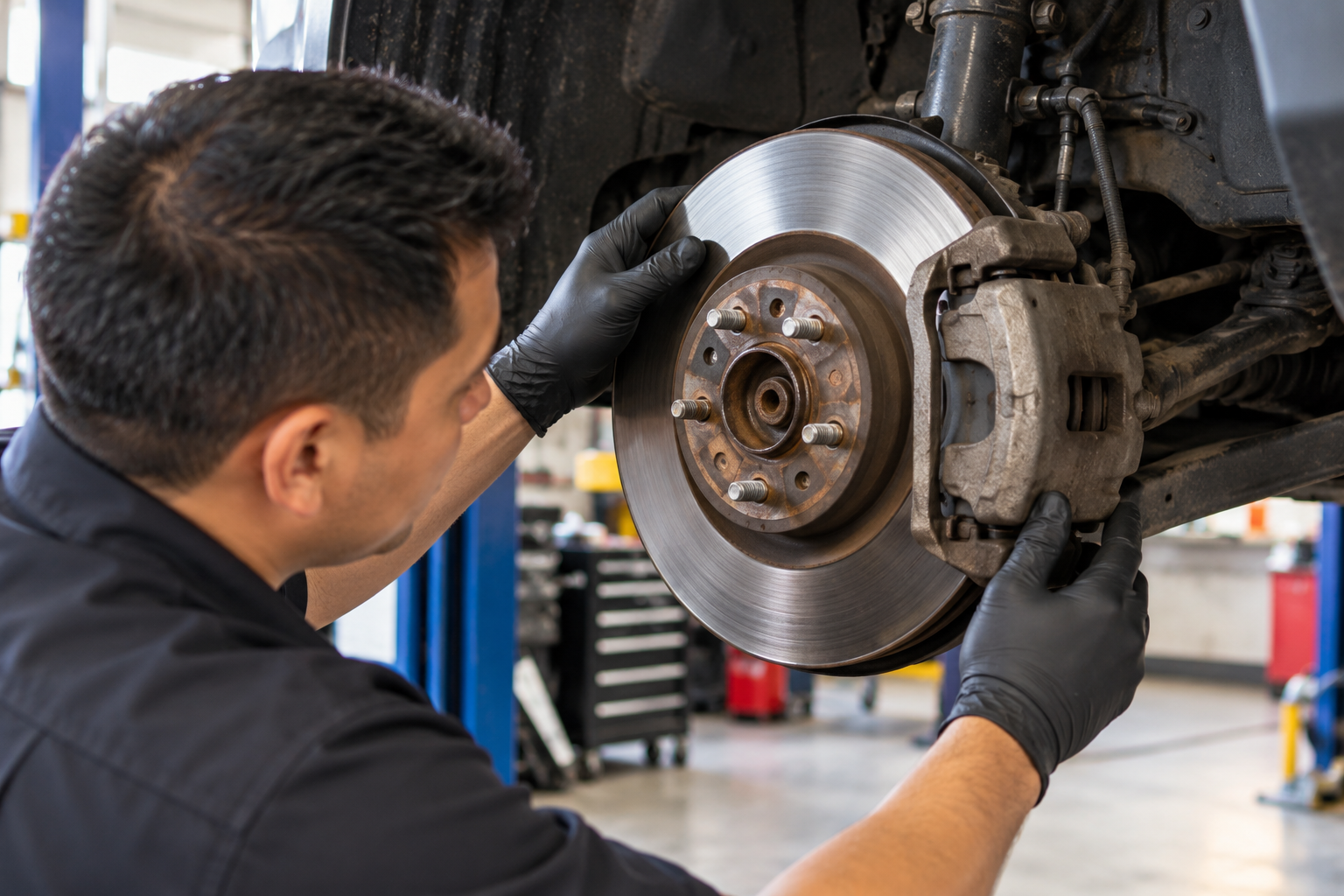
You press the brake pedal to slow down, but instead of a smooth stop, your steering wheel starts shaking or you feel a vibration through the brake pedal.
If your car shakes when braking, it's a sign worth paying attention to. The problem may involve your brake rotors, pads, calipers, or other components that affect how your vehicle slows down.
Some vibrations develop gradually, while others seem to appear suddenly. Either way, the important thing is to identify what's causing the shaking before it affects your ability to stop safely.
At Pearl City Auto Works, we help drivers in Aiea, Pearl City, and surrounding Oahu communities diagnose and address brake concerns. Below, we'll explain the common causes of braking vibrations, what different symptoms may mean, and when it's time to schedule an inspection.
5 Common Causes of Car Shaking When Braking
Brake vibrations can have several causes. Although certain symptoms may point toward a particular component, a proper inspection is needed to determine the actual problem.
1. Uneven Brake Rotors
One of the most common explanations for a car vibrating when braking is uneven brake rotor thickness or surface condition.
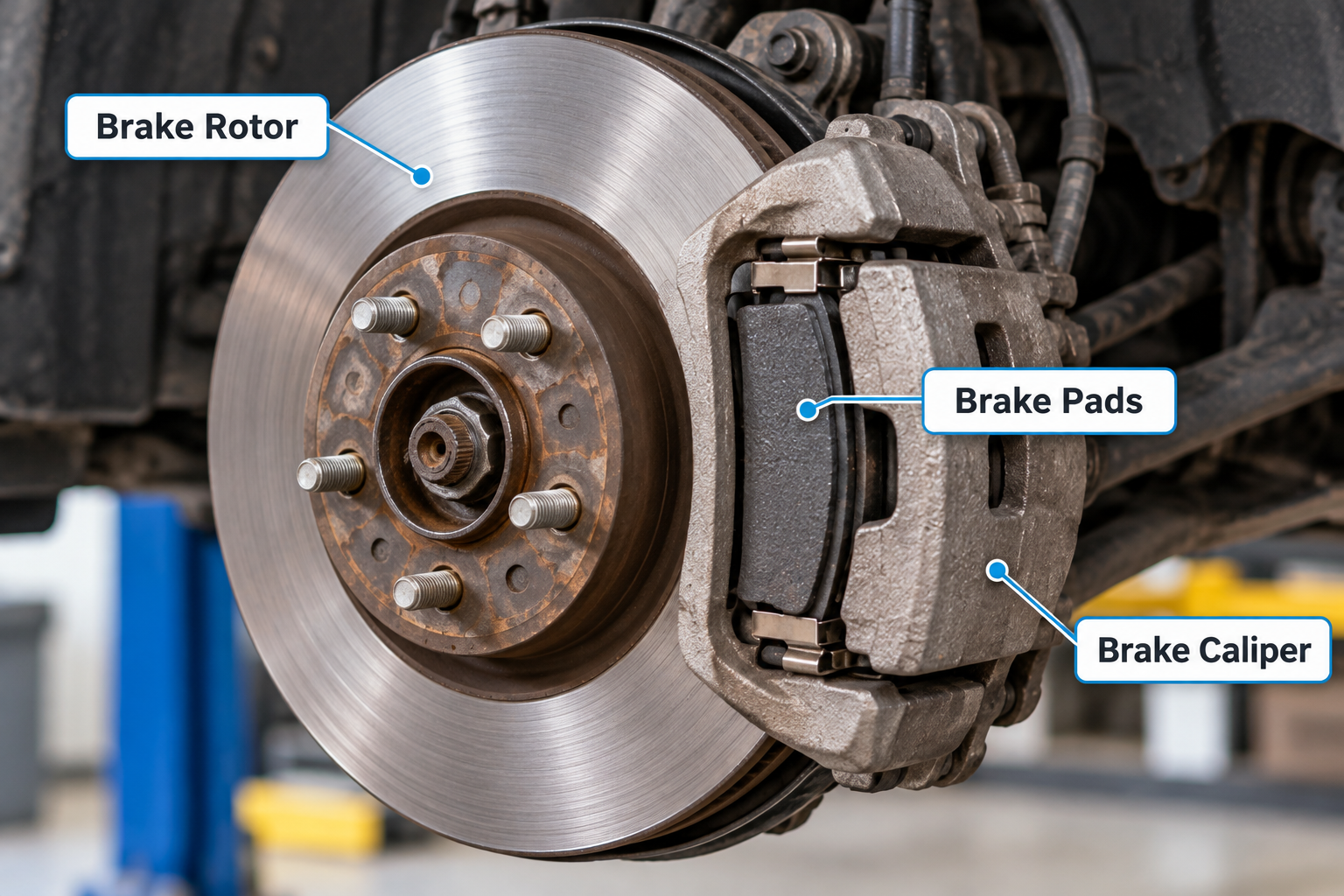
Brake rotors are the metal discs that your brake pads press against to slow the vehicle. For smooth braking, the pads need to make consistent contact with the rotor surfaces.
Over time, uneven wear, variations in rotor thickness, or deposits on the rotor surface can create inconsistent braking force. You may feel this as a repeated pulsing or shaking sensation.
Common symptoms include:
- Steering wheel vibration when applying the brakes
- Brake pedal pulsation during normal braking
- Shaking that becomes more noticeable at certain speeds
- Vibration that happens primarily while slowing down
You may hear these issues described as warped brake rotors symptoms. However, not every rotor-related vibration means the rotor is physically bent or warped. Uneven thickness or friction material deposits can produce similar symptoms.
The correct repair depends on the rotor's condition and measurements, not just how the vibration feels.
2. Worn or Uneven Brake Pads
Brake pads gradually wear down each time you use your brakes. As they wear, their condition can affect how consistently they contact the rotors.
Uneven pad wear may be associated with sticking brake hardware, caliper problems, or other issues within the braking system.
Possible warning signs include:
- Vibration or roughness during braking
- Squealing or grinding noises
- Reduced braking performance
- One brake pad wearing faster than another
Worn pads don't always cause shaking by themselves. However, damaged or unevenly worn pads can contribute to braking problems, particularly when other components are also affected.
If you hear grinding while braking, don't assume the issue is limited to the pads. Metal-to-metal contact can damage other brake components and requires prompt attention.
3. Sticking Brake Calipers
Brake calipers help apply pressure to the brake pads when you press the pedal.
If a caliper or its sliding components aren't moving correctly, a brake may remain partially engaged or apply uneven pressure.
This can create excess heat and uneven wear.
Symptoms that may indicate a sticking caliper include:
- The vehicle pulling to one side while braking
- A burning smell near a wheel
- Unusual heat coming from one wheel area
- Uneven brake pad wear
- Shaking or rough braking
A sticking caliper may also contribute to rotor problems because of the additional heat it generates.
If you notice a strong burning smell, smoke, or a wheel that appears unusually hot, stop driving when it's safe to do so and arrange professional assistance. Don't touch the wheel or brake components to check their temperature.
4. Worn Steering or Suspension Components
Not every shaking sensation during braking starts with the brakes themselves.
Your vehicle's steering and suspension systems help keep the wheels stable and properly positioned. Worn components can allow unwanted movement that becomes more noticeable when braking shifts the vehicle's weight forward.
Potential contributors include:
- Worn control arm bushings
- Loose or worn ball joints
- Worn tie rod ends
- Other damaged steering or suspension components
These issues may cause steering wheel shaking, looseness, clunking noises, or changes in handling.
If your steering wheel shakes when braking, the brake system is an important place to investigate, but it shouldn't be the only system considered.
Our shop also provides steering repair services when an inspection identifies a steering-related concern.
5. Wheel or Tire Problems
Wheel and tire problems can sometimes be mistaken for brake-related vibrations.
For example, an out-of-balance wheel or damaged tire may cause shaking at particular driving speeds. The sensation can remain noticeable as you slow down, even though applying the brakes isn't the underlying cause.
Clues that suggest a wheel or tire issue include:
- Vibration while driving without braking
- Shaking that appears within a particular speed range
- Visible tire damage or unusual tire wear
- A vibration that changes as vehicle speed changes
A useful distinction is whether the shaking happens only when you press the brake pedal or also occurs during normal driving.
That information can help narrow down what needs to be inspected.
Steering Wheel, Brake Pedal, or Whole Car Shaking: What Does It Mean?
Where you feel the vibration can provide useful clues about the source of the problem.
| What you're experiencing | What it may indicate |
|---|
| Steering wheel shakes when braking | Front brake rotor variation or steering and suspension issues |
| Brake pedal pulses during normal braking | Rotor thickness variation or other brake-related irregularities |
| Whole car vibrates when braking | Brake problems or other wheel-related issues |
| Car pulls to one side when braking | Uneven braking force, a sticking caliper, or another steering or tire issue |
| Car shakes even when you're not braking | Wheel balance, tire damage, or other non-brake causes |
| Brief pedal pulsation during ABS activation | Normal anti-lock braking system operation may be occurring |
These are possible explanations, not a way to diagnose your vehicle at home.
For example, front brake problems often make vibration more noticeable through the steering wheel, but symptoms can vary depending on the vehicle and the components involved.
When scheduling an inspection, it helps to describe exactly where you feel the shaking and when it happens.
Is It Safe to Drive When Your Car Shakes While Braking?
A car that shakes when braking should be inspected promptly, even if it still seems to stop normally.
The seriousness depends on what's causing the vibration. Some problems develop gradually, while others can affect braking performance or vehicle control.
When to Schedule a Brake Inspection
Arrange an inspection if you notice:
- Shaking that happens repeatedly during ordinary braking
- Steering wheel vibration that becomes more noticeable
- Brake pedal pulsation that wasn't present before
- New squealing, scraping, or grinding noises
- A change in how the vehicle responds when slowing down
Don't wait for the vibration to become severe. Finding the cause early may help prevent additional component damage.
When to Stop Driving
Stop in a safe location and arrange professional assistance if you experience:
- Significantly reduced braking ability
- A brake pedal that suddenly feels unusually soft or sinks toward the floor
- Severe shaking that makes the vehicle difficult to control
- Strong pulling to one side during braking
- Smoke or a strong burning smell near a wheel
- A brake warning light accompanied by abnormal braking performance
If the vehicle isn't braking or handling normally, don't continue driving it to a repair shop.
Is Brake Pedal Vibration Ever Normal?
Yes. During hard braking or on slippery surfaces, your vehicle's anti-lock braking system (ABS) may activate to help prevent wheel lockup.
When ABS operates, you may feel a rapid pulsing sensation through the brake pedal. That can be normal.
However, repeated brake pedal vibration during routine stops on dry roads shouldn't automatically be attributed to ABS. Have it checked to determine whether a brake component needs attention.
Do Shaking Brakes Always Mean You Need New Rotors?
No. Although uneven brake rotors are a common cause of braking vibration, they aren't the only possibility.
The problem could involve brake pads, calipers, steering components, or another part of the vehicle.
Even when the rotors are responsible, replacement isn't automatically the only option.
A technician may need to evaluate:
- Rotor thickness and thickness variation
- Rotor surface condition
- Manufacturer minimum thickness specifications
- Brake pad condition
- Caliper operation
- Signs of overheating or uneven wear
Depending on the condition of the components and manufacturer requirements, resurfacing may be an option in some cases. In others, replacement is the appropriate repair.
It's also important to identify why the rotor developed an uneven surface. If a sticking caliper or another underlying issue contributed to the problem, addressing only the rotor may not resolve the cause.
The best approach is to inspect the braking system before deciding which parts, if any, need replacement.
What to Expect During a Brake Inspection at Our Aiea Shop
If your car shakes when braking, we'll start by learning more about what you've been experiencing.
It helps to tell us whether the vibration occurs at highway speeds, during slower stops, while going downhill, or every time you apply the brakes.
Depending on the symptoms, an inspection may involve checking the brake pads, rotors, calipers, and related components. If the shaking suggests another source, steering, suspension, or wheel-related components may also need attention.
At Pearl City Auto Works, we provide brake system maintenance and repair, including work involving brake pads, rotors, and other brake system components.
We explain our findings and discuss recommended repairs before proceeding with work that requires your authorization.
A Note for Oahu Drivers
Stop-and-go traffic, repeated braking on hills, and exposure to moisture and salt air can contribute to brake wear or corrosion over time.
However, local driving conditions alone don't explain why a particular vehicle is shaking.
For more information about corrosion-related concerns, read our article on how Oahu's salty air and humidity affect your car's brakes and undercarriage.
Get Your Brakes Checked at Pearl City Auto Works in Aiea
If your car shakes when braking, don't assume the problem is minor or that you automatically need new brake rotors.
The safest way to understand what's happening is to have the braking system inspected.
At Pearl City Auto Works, we help drivers in Aiea, Pearl City, and surrounding Oahu communities with brake system maintenance, inspections, and repairs.
Whether you're feeling a vibration through the steering wheel, noticing brake pedal pulsation, or experiencing rough stops, we're here to help identify the cause and explain your repair options.
CONTACT US TODAY!BOOK A NO-CONTACT APPOINTMENT