Driving a modern vehicle on the H-1 freeway feels entirely different than it did just a decade ago. Today’s cars are essentially rolling computers equipped with a network of digital eyes and ears. If your vehicle can automatically hit the brakes to avoid a rear-end collision, alert you when you drift out of your lane, or perfectly pace the car ahead of you in Oahu stop-and-go traffic, you are driving a vehicle equipped with ADAS.
ADAS stands for Advanced Driver Assistance Systems. These high-tech safety features are designed to minimize human error and prevent accidents before they happen. However, this advanced technology is highly sensitive. The cameras and radar sensors that act as the "eyes" of the system must be aimed with absolute mathematical perfection to function correctly. When a vehicle undergoes certain common repairs, these sensors get knocked out of alignment. Restoring their precise aim requires a specialized service known as an ADAS calibration.
Understanding Your Vehicle's Safety Sensors
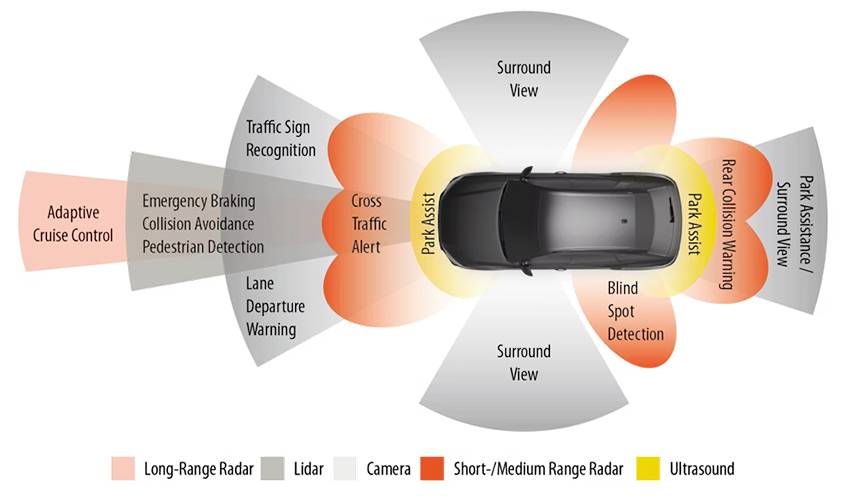
According to the National Highway Traffic Safety Administration (NHTSA), driver assistance technologies hold the potential to reduce traffic crashes and save thousands of lives every single year. These systems rely on a complex array of hardware mounted directly to the exterior and interior of your vehicle:
- Forward-Facing Cameras: Typically mounted behind your rearview mirror against the windshield. They read lane markings, detect pedestrians, and recognize speed limit signs.
- Radar Sensors: Often hidden directly behind your front grille, bumper covers, or rear quarter panels. They bounce radio waves off surrounding objects to measure distance and speed for adaptive cruise control and blind-spot monitoring.
- Ultrasonic Sensors: The small circular dots visible on your front and rear bumpers, primarily used for low-speed parking assistance.
When these sensors send accurate data to your engine control module, the vehicle can react in milliseconds to keep you safe. If the sensors are even one degree out of alignment, the computer receives false data. The system might slam on the brakes for a shadow on the road, or worse, completely fail to detect a stopped car in front of you.
What Exactly is an ADAS Calibration?
An ADAS calibration is the highly precise procedure by which a certified technician aligns your vehicle's cameras, radar arrays, and lidar units back to the manufacturer's exact specifications.
Because the sensors are looking hundreds of feet down the road, a physical misalignment of just a single millimeter at the bumper translates to a massive blind spot at highway speeds. Calibrating the system tells the vehicle's computer exactly where the cameras are pointing so the software can process the visual and radar data correctly.
There are two primary methods for performing this complex procedure:
Static Calibration
Static ADAS calibration occurs inside a specialized, highly controlled garage environment while the car remains completely stationary. The technician places large geometric target boards at precise distances and heights around the vehicle. Using advanced diagnostic computers and laser leveling tools, the technician teaches the vehicle's cameras how to recognize and center themselves on the targets. This requires perfectly level flooring, specific lighting conditions, and precise tire inflation.
Dynamic Calibration
Dynamic ADAS calibration is performed while the vehicle is actively being driven on the road. The technician connects a diagnostic scanner to the vehicle's OBD-II port and initiates a learning sequence. The technician then drives the car at specific speeds on clearly marked roads. The vehicle's cameras recalibrate themselves by reading the solid white and dotted yellow lane lines painted on the asphalt.
When Does Your Car Require a Calibration?
Calibration is not a routine maintenance item like an oil change. It is only required when the physical geometry of the vehicle has been altered or a sensor has been disturbed. You must request an ADAS calibration immediately following any of these events:
1. Windshield Replacement
The forward-facing camera is physically mounted to a bracket glued to the windshield glass. When a rock cracks your windshield and the glass is replaced, the camera is temporarily removed. All vehicle manufacturers strictly require a full camera calibration after a windshield replacement to ensure the lens is aimed perfectly through the new glass.
2. Wheel Alignment or Suspension Repairs
ADAS sensors calculate data based on the geometric centerline of your vehicle, known as the thrust angle. If you change the thrust angle by performing a heavy wheel alignment or replacing worn suspension components, the car will drive perfectly straight, but the cameras will be pointing slightly off to the side. You must recalibrate the sensors to match the new driving angle of the tires.
3. Minor Collisions and Bumper Repairs
A minor fender bender in a parking lot might just look like a scratched bumper, but the impact easily shifts the radar sensor brackets hidden underneath the plastic. If a body shop removes your bumper to paint it, they must recalibrate the blind-spot monitors and forward radar sensors before returning the vehicle to you.
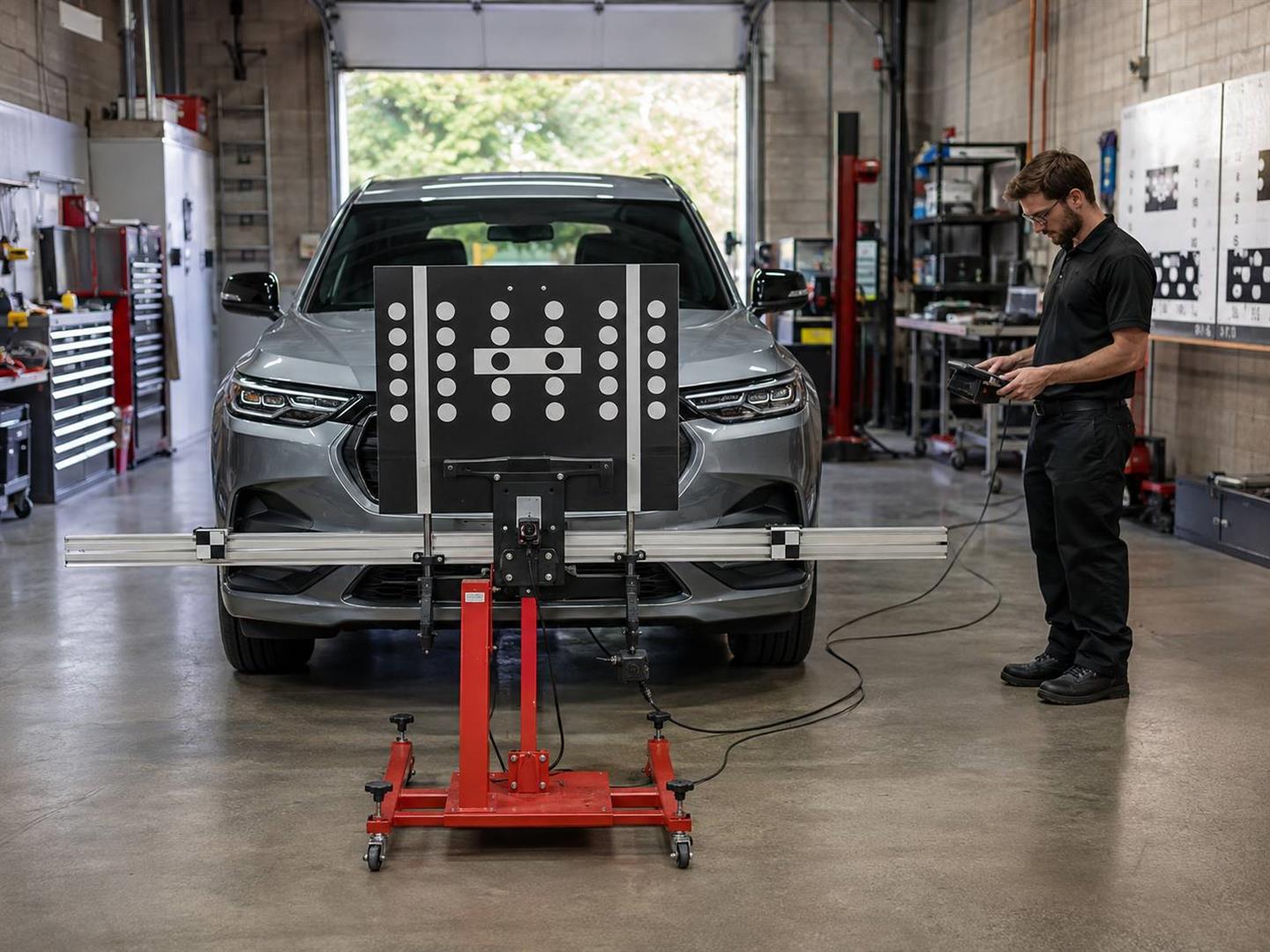
Static calibration utilizes highly specific geometric targets to reset the forward-facing camera
Frequently Asked Questions About ADAS Calibration
What does ADAS actually stand for? ADAS stands for Advanced Driver Assistance Systems. It is the umbrella term for all the active safety features on your vehicle, including lane keep assist, automatic emergency braking, and adaptive cruise control.
How long does an ADAS calibration take to complete? The calibration process generally takes between 1 and 2 hours, depending on the make and model of the vehicle and whether it requires a static or dynamic calibration procedure.
Is a calibration really necessary if my car drives fine after a windshield replacement? Yes, it is absolutely necessary. Even if the dashboard warning lights are off, the camera could be aiming a few degrees off-center. In an emergency, the automatic braking system might calculate the distance to the car ahead incorrectly, resulting in a severe crash.
Can any auto shop perform an ADAS calibration? No. Performing a static calibration requires a massive initial investment in specific target boards, laser measuring tools, and high-end computer scanners. The shop also needs a large bay with perfectly level flooring. Only highly equipped independent shops and dealerships have the capability to perform these services correctly.
How do I know if my car actually has ADAS features? If your vehicle was manufactured after 2016, there is a very high probability it is equipped with at least one ADAS feature. If your car beeps when you cross a lane line, has adaptive cruise control, or flashes a warning in the side mirrors when someone is in your blind spot, you have an ADAS-equipped vehicle.
What Local Oahu Drivers Are Saying
Choosing the right shop to handle complex electronic diagnostics requires immense trust. Here is what local Oahu drivers are saying about their experience with our highly trained technicians:
"Went to PCAW for the first time after the worst dealership service in my many years of car ownership. Excellent customer service from the front desk to the mechanics. Very clear communication, no pushy sales tactics. Everything is expensive nowadays, but I am 100% sure I saved hundreds compared to the dealership."
- Sal Aurigemma, Local Customer
"I really loved their honest look at a pre-purchase inspection. We were in need of a car and they got us in quickly to look at the car. We will definitely be back."
- Jeff Linzey, Local Customer
Trust the Calibration Experts in Pearl City
Your Advanced Driver Assistance Systems are the final line of defense protecting you and your family from unexpected hazards on the road. You cannot afford to guess whether your forward-collision warning is aimed correctly after a suspension repair or a minor bumper impact.
At Pearl City Auto Works, our ASE-certified technicians utilize industry-leading, dealership-level calibration equipment to restore your vehicle's safety systems to perfect factory specifications. We understand the complex relationship between your vehicle's steering geometry and its digital sensors. If you recently replaced your windshield, survived a minor fender bender, or noticed your safety systems behaving erratically, do not wait. Ensure your vehicle is actively protecting you by scheduling a comprehensive diagnostic and calibration service today.
Book a no contact appointment