Oahu drivers are meticulous about getting their oil changed and keeping their tires rotated to handle the daily grind on the H-1 freeway. However, there is one crucial engine component that is consistently ignored until it is too late: the timing belt. Because this belt is hidden behind heavy protective covers, out of sight means out of mind.
Ignoring a timing belt is a massive financial gamble. Unlike a squeaking serpentine belt that simply causes your air conditioning to stop working if it breaks, a snapped timing belt can instantly destroy the internal components of your engine while you are driving. Understanding exactly what this reinforced rubber belt does, when to replace it, and the catastrophic damage it causes when it fails will save you thousands of dollars in engine replacements.
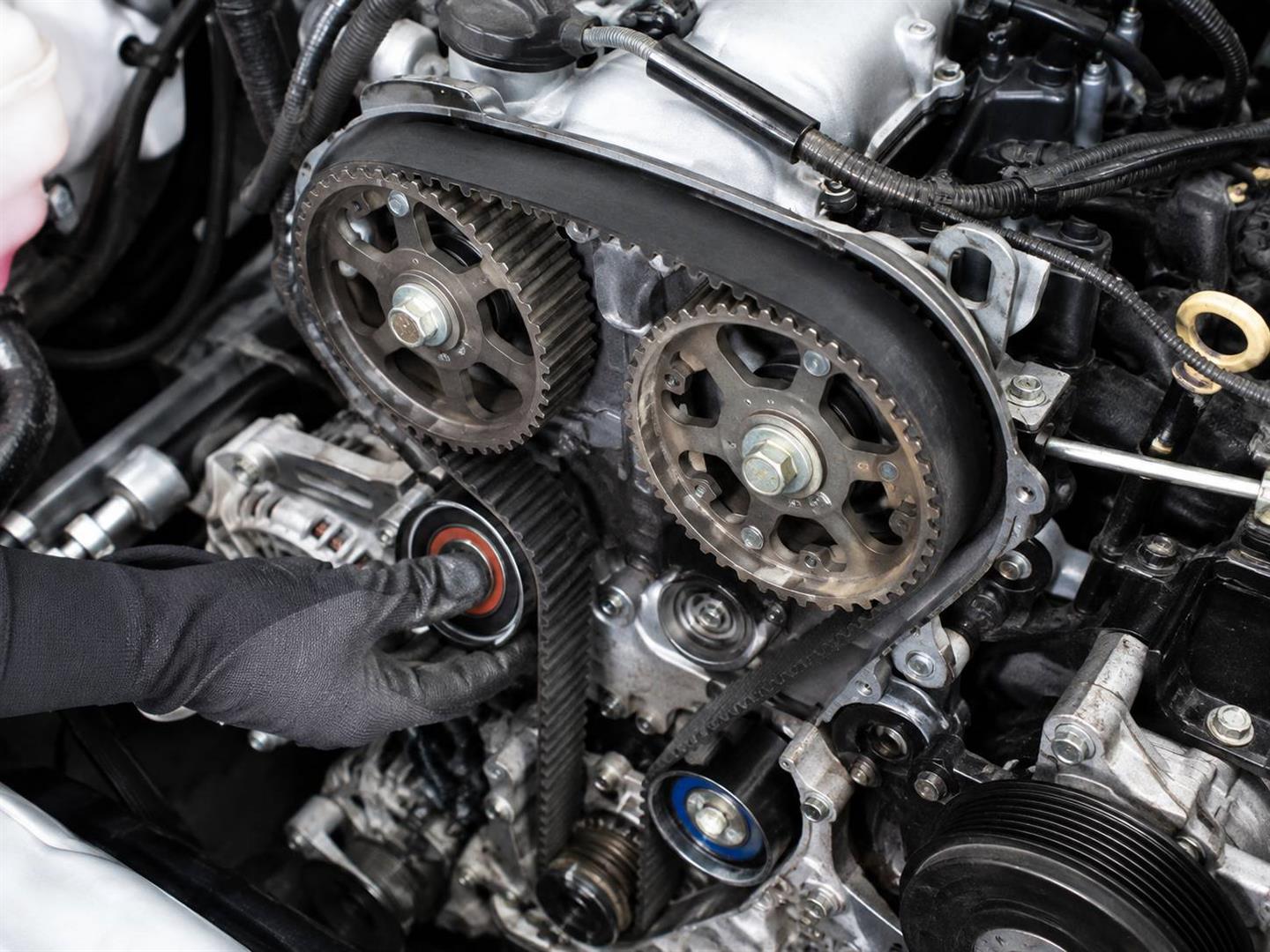
What is a Timing Belt and What Does It Do?
An internal combustion engine requires precise mechanical choreography to generate power. The bottom half of your engine contains the heavy pistons attached to the crankshaft. These pistons move up and down rapidly inside the cylinders. The top half of your engine contains the cylinder head, which holds the camshafts and the valves. The valves open to let air and fuel in, and then open again to let exhaust gases out.
The timing belt is a heavy-duty, notched rubber belt that physically connects the crankshaft at the bottom to the camshafts at the top.
As the bottom of the engine turns, the timing belt ensures the top of the engine rotates at the exact same relative speed. It forces the valves to open and close in perfect synchronization with the pistons moving up and down. This perfect mechanical timing ensures the piston never hits the valves while they are open.
Interference vs. Non-Interference Engines: Why Snapping is Catastrophic
What actually happens if the rubber timing belt snaps while you are accelerating up the Pali Highway? The answer depends entirely on the specific engineering design of your engine.
Non-Interference Engines
In a non-interference engine, the pistons and the valves are given enough clearance that they never share the exact same physical space inside the cylinder, even if the timing is completely off. If the timing belt snaps, the camshaft stops spinning and the valves stop opening. The engine will immediately stall, leaving you stranded on the side of the road. However, you can simply tow the vehicle to a mechanic, install a new timing belt, and the engine will run perfectly fine again.
Interference Engines
Most modern, highly efficient engines are "interference" designs. To create more power and better fuel economy, engineers force the valves to open incredibly deep into the cylinder chamber. The open valves and the top of the piston literally share the same physical space, just at different fractions of a second. The timing belt is the only thing keeping them from colliding.
If a timing belt snaps on an interference engine at 60 MPH, the camshaft stops instantly. The valves freeze in the fully open position. The heavy pistons at the bottom of the engine continue flying upward with massive kinetic energy. The pistons violently slam directly into the open metal valves.
This collision bends the valves, destroys the pistons, and often cracks the cylinder head entirely. This is a catastrophic mechanical failure. A snapped belt on an interference engine almost always requires a complete engine rebuild or a full engine replacement
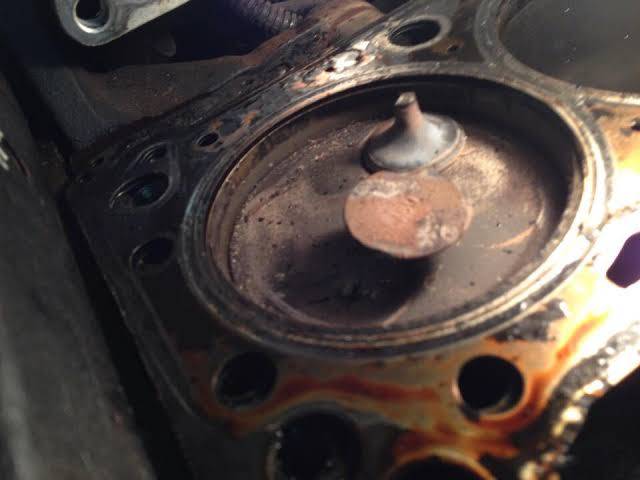
In an interference engine, a snapped timing belt causes the pistons to smash into the valves.. Source: Reddit
When Should You Replace Your Timing Belt?
Timing belts degrade based on two factors: total mileage and total age. Because it is made of rubber and nylon, a belt will dry rot and crack over time even if the vehicle sits parked in a garage.
You must consult your vehicle's specific owner's manual for the exact replacement interval. However, the industry standard guidelines are very clear:
- Mileage Interval: Most manufacturers require a timing belt replacement between 60,000 and 100,000 miles.
- Time Interval: If you do not drive frequently, the belt must be replaced every 7 to 10 years, regardless of how low the mileage is on the odometer.
Do not try to squeeze an extra 10,000 miles out of an old timing belt. The cost of preventative replacement is a tiny fraction of the cost of replacing a destroyed engine.
Warning Signs of a Failing Timing Belt
Because the belt is hidden behind covers, you rarely get a visual warning before it snaps. However, you can listen and feel for these specific mechanical symptoms that indicate the belt is stretching or beginning to fail.
| Warning Symptom | What it Means mechanically | Immediate Action |
|---|
| A ticking noise from the engine | The belt is stretching, throwing off the precise timing of the camshafts. | Schedule an inspection immediately. |
| Engine misfires or runs rough | The belt has skipped a tooth on the gear, causing poor combustion. | Do not drive; tow to a mechanic. |
| An oil leak near the front of the motor | A failing camshaft seal is dripping oil onto the rubber belt, degrading it rapidly. | Replace seals and timing belt together. |
| Engine will not turn over | The starter engages, but the engine won't start because the belt has already snapped. | Tow to a shop for internal damage assessment. |
Why Replace the Water Pump at the Same Time?
If you receive a quote for a timing belt service, you will almost always see a recommendation to replace the water pump simultaneously. This is not an upsell; it is a critical best practice in automotive repair.
On the vast majority of vehicles, the water pump is located directly behind the timing belt and is actually driven by the timing belt itself. Accessing the water pump requires the mechanic to perform all the exact same labor required to change the timing belt.
If you replace the belt but leave the old 90,000-mile water pump in place, that old pump will likely fail a few months later. When it fails, you will have to pay the massive labor charge all over again just to reach it. Furthermore, if the water pump bearing seizes while driving, it will instantly snap your brand-new timing belt. Replacing them both as a set guarantees reliability and saves you hundreds of dollars in overlapping labor costs.
Frequently Asked Questions (FAQ)
Does my car have a timing belt or a timing chain? Many modern vehicles have transitioned to metal timing chains instead of rubber belts. Timing chains generally last the lifetime of the engine and do not require scheduled replacements, provided you change your engine oil diligently. You can call our shop or check your owner's manual to find out exactly what your vehicle uses.
Can I inspect the timing belt myself to see if it looks worn? It is very difficult for a DIY owner. The belt is protected by a sealed plastic or metal cover. Removing this cover often requires moving engine mounts, the serpentine belt, and the harmonic balancer. Professional inspection is heavily recommended.
Why is a timing belt replacement so expensive? The part itself is relatively inexpensive. The cost is heavily driven by the labor required. The mechanic must dismantle the entire front of the engine, lock the camshafts into perfect alignment with specialized tools, and carefully reassemble everything without shifting the gears a single millimeter.
Will a snapped timing belt show a check engine light? If it snaps while driving, the engine will die instantly, and every warning light on your dashboard will illuminate simultaneously as the car loses power. If the belt stretches and skips a gear tooth, the computer will definitely trigger a check engine light for a camshaft correlation code or a severe engine misfire.
What is a timing belt tensioner? The tensioner is a hydraulic or spring-loaded mechanical pulley that keeps the rubber belt pulled tight against the gears. If the tensioner fails, the belt becomes loose and violently slaps around inside the cover before snapping. We always replace the tensioner and idler pulleys alongside the timing belt.
What Local Oahu Drivers Are Saying
"Everyone was friendly. They were honest about what needed to be done and what did not need to be done. Prices were fair. Easy decision to bring your car here."
- Tiffany, Local Customer
"Great service, personable interactions with the service counter, and relatively quick turn-around. Communication could have been a little better about needing an extra half-day... but I will definitely be back."
- Jeff Linzey, Local Customer
Secure Your Engine's Future in Pearl City
Gambling with an old timing belt on an interference engine is a risk you cannot afford to take. A simple preventative maintenance appointment keeps your vehicle safe and prevents a massive repair bill down the road.
At Pearl City Auto Works, our ASE-certified technicians specialize in complex, high-precision Timing Belt Service. We utilize dealership-level alignment tools to ensure perfect mechanical synchronization. We replace the water pump, tensioners, and pulleys as a complete kit to guarantee the long-term reliability of your engine in harsh Oahu driving conditions. Do not wait for your belt to snap on the H-1. Check your mileage and schedule your replacement today.
Book a no contact appointment