Getting a routine oil change is the single most important maintenance task for keeping your vehicle healthy. However, when you sit down at the counter of an auto repair shop, you are immediately asked a fundamental question: "Do you want conventional oil, a synthetic blend, or full synthetic?"
It can be tempting to simply choose the cheapest option on the menu board to save a few dollars. After all, oil is just oil, right? On Oahu, that line of thinking can quietly shorten the lifespan of your engine. Hawaii driving conditions place a unique set of thermal and mechanical demands on your motor oil. Between constant stop-and-go traffic on Kamehameha Highway, steep mountain ascents, high ambient humidity, and short trip driving cycles, your engine oil works significantly harder here than in mainland highway driving.
Understanding the molecular differences between conventional and synthetic lubricants empowers you to make the smartest financial and mechanical decision for your vehicle.
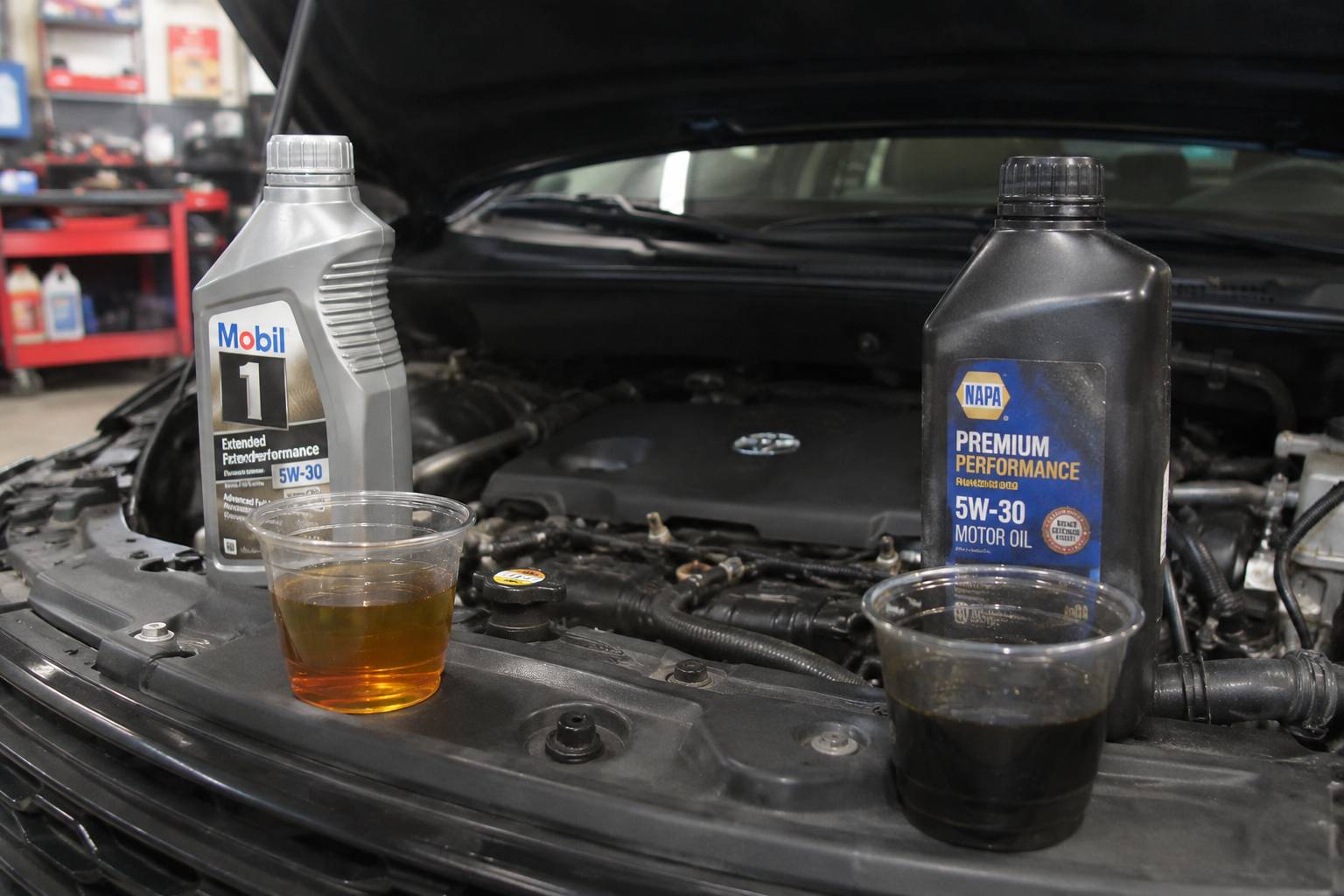
The Molecular Difference: Refined vs. Engineered
To understand why one oil outperforms another, you have to look at what is happening at the microscopic level inside your engine.
Conventional Motor Oil
Conventional oil is distilled directly from crude oil extracted from the ground. While it goes through a refining process to remove impurities, conventional oil molecules vary drastically in shape and size.
Because the molecules are uneven, conventional oil breaks down rapidly under extreme heat. The smaller molecules burn off, while the larger molecules oxidize and clump together to form thick black sludge. As sludge accumulates inside your engine, it blocks narrow oil passages, starves critical components of lubrication, and causes internal temperatures to soar.
Full Synthetic Motor Oil
Full synthetic oil is not simply refined crude oil; it is chemically synthesized from pure base compounds in a laboratory setting. Scientists design synthetic oil molecules to be virtually identical in size, shape, and structure.
Because every molecule is uniform, synthetic oil flows with significantly less internal fluid friction. It resists thermal breakdown at temperatures exceeding 400 degrees Fahrenheit and maintains its protective film strength under extreme mechanical pressure. It also contains advanced detergent additives that actively sweep away harmful deposits before they can bake onto internal engine surfaces.
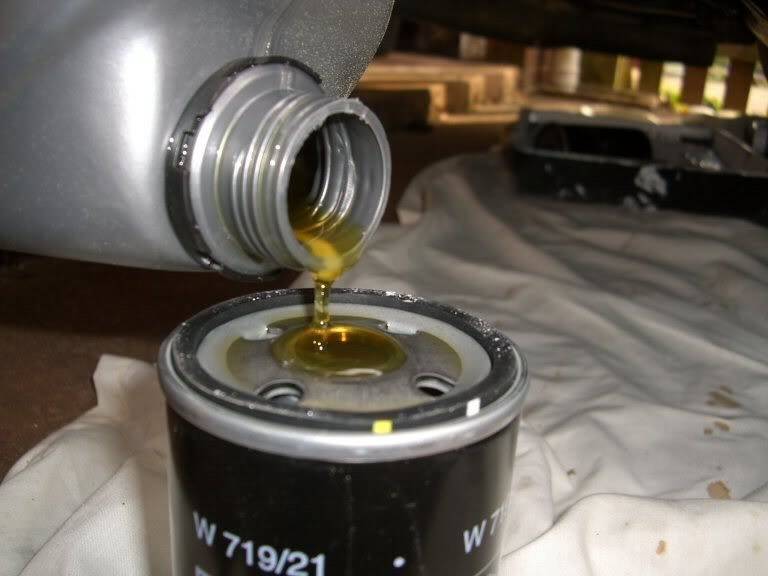
Why Hawaii Driving Demands Superior Lubrication
Hawaii presents a very specific set of environmental and driving challenges that accelerate motor oil degradation.
1. Severe Stop-and-Go Traffic Idling in heavy traffic on the H-1 freeway creates extreme heat soaking. When your car sits motionless in traffic, there is no high-speed airflow entering the front grille to cool the engine bay. Conventional oil begins to oxidize and break down rapidly in these high-heat idling conditions, whereas synthetic oil retains its structural integrity.
2. High Humidity and Moisture Contamination Hawaii’s tropical climate means the air is constantly saturated with moisture. When you park your car overnight, condensation naturally collects inside the engine crankcase. Full synthetic oils contain specialized anti-corrosion additives that neutralize trapped moisture, preventing internal rust and acid formation.
3. Short Trip Driving Patterns Living on an island means many daily drives are under 15 minutes. During short trips, the engine oil never reaches its full operating temperature. In a cold engine, unburned fuel washes down the cylinder walls and mixes directly into the oil. Synthetic oil is far more resilient to chemical dilution from raw fuel than conventional oil.
Comparing Motor Oil Options
Choosing the right motor oil depends on your vehicle's age, mileage, engine design, and your personal budget. Use this breakdown to see how the three main types of oil stack up.
| Feature / Metric | Conventional Oil | Synthetic Blend | Full Synthetic Oil |
|---|
| Base Origin | Refined crude oil | Mixture of crude and synthetic | Chemically engineered molecules |
| High Heat Resistance | Moderate (Prone to sludge) | Good thermal protection | Superior (Resists breakdown) |
| Cold Start Flow Rate | Slow (Causes engine wear) | Moderate flow speed | Instantaneous lubrication |
| Recommended Change Interval | 3,000 miles / 3 months | 5,000 miles / 6 months | 7,500 - 10,000 miles / 12 months |
| Upfront Cost | Lowest initial price | Balanced mid-range cost | Higher initial price |
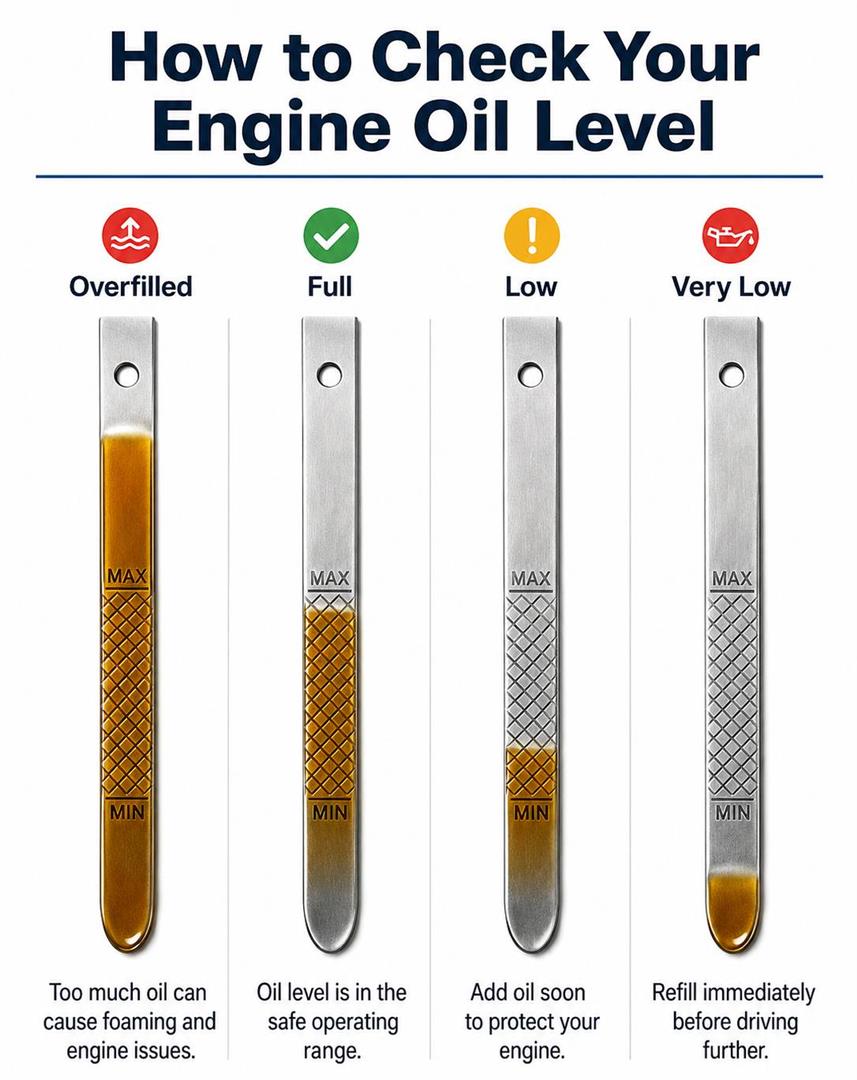
Checking your dipstick regularly ensures your engine oil stays at a safe level.
Frequently Asked Questions (FAQ)
Can switching to synthetic oil cause oil leaks in older cars? This is a persistent automotive myth left over from the 1970s. Modern synthetic oils will not cause engine seals to leak. However, if an older engine already has hardened, cracked seals that are currently clogged with old conventional oil sludge, the cleaning detergents in synthetic oil will wash that sludge away, revealing the pre-existing leak. If your older engine has healthy rubber seals, synthetic oil will actually help keep them soft and pliable.
If I use full synthetic oil, do I still need to check my oil level? Yes, absolutely. Synthetic oil resists thermal breakdown longer, but your engine can still burn or consume small amounts of oil over time. You should pull your dipstick and verify the fluid level at least once a month.
Will using synthetic oil void my new car warranty? No. In fact, the vast majority of modern vehicle manufacturers explicitly mandate full synthetic oil in their owner's manuals. Using conventional oil in a car that requires synthetic will void your powertrain warranty if an engine failure occurs.
What is a synthetic blend oil? Synthetic blend oil is a mixture of conventional crude base oil and synthetic base stock. It offers better heat resistance and flow properties than pure conventional oil at a price point lower than full synthetic. It is a great middle-ground option for older, non-turbocharged vehicles.
How often should I change my synthetic oil in Hawaii? While synthetic oil manufacturers advertise intervals of 10,000 miles or more, driving in Hawaii is categorized as "Severe Conditions" by automotive engineers due to heat, humidity, and stop-and-go traffic. We strongly recommend changing your full synthetic oil every 5,000 to 7,500 miles or every 6 months to guarantee maximum protection.
What Local Oahu Drivers Are Saying
Here is what your neighbors in Pearl City and Aiea have to say about trusting our shop with their vehicle maintenance:
"The staff were friendly, knowledgeable and quick. I'll definitely work with them again."
- Jack Davis, Local Customer
"Honest mechanics that try to find the best deal on parts, not just go straight to the dealer. I had a vehicle I took to three other shops and no one knew what was wrong. They figured it out and it was just a hundred dollars. I only recommend this place."
- Jacob Wernicke, Local Customer
Premium Maintenance Services in Pearl City
Choosing the right motor oil is an investment in the long-term health, performance, and resale value of your vehicle. While full synthetic oil carries a slightly higher upfront cost, it pays for itself by dramatically reducing friction, preventing sludge formation, and extending the lifespan of critical internal engine components.
At Pearl City Auto Works, our ASE-certified technicians do not just perform a quick drain and fill. Every professional Oil Change appointment includes a comprehensive digital safety inspection. We inspect your belts, hoses, tires, and brakes, providing clear photographic reports so you always know the exact health of your car. Keep your engine running smoothly in island traffic by booking your next service with us today.
Book a no contact appointment