Oahu driving relies heavily on a functioning brake system. Commuting down the steep grades of the Pali Highway or sitting in heavy traffic on Kamehameha Highway requires constant, reliable stopping power. Drivers often tune out the sounds their vehicles make over time. Ignoring a change in how your brakes sound or feel is a dangerous gamble.
Automotive engineers designed your braking system to communicate its mechanical wear level directly to you. The components produce very specific noises and physical sensations as they degrade. Listening to these auditory cues prevents minor wear from escalating into a catastrophic loss of stopping power. Understanding the mechanics behind a high-pitched squeal or a sinking brake pedal empowers you to address the problem before you compromise your safety on the road.
The Anatomy of a Safe Stop
Before diagnosing a strange noise, you must understand the basic mechanics of a vehicle stopping. Most modern vehicles utilize a hydraulic disc brake system on the front wheels. The front brakes handle the vast majority of the stopping force due to the forward weight transfer of the vehicle.
When you press the brake pedal, you push a plunger inside the master cylinder. This action forces pressurized hydraulic brake fluid through steel lines down to the brake calipers at each wheel. The caliper acts as a massive hydraulic clamp. It squeezes two brake pads against a spinning cast iron disc called a rotor. The resulting friction slows the vehicle down.
Every component in this chain is susceptible to wear, heat degradation, and eventual failure. The friction material physically burns away. The cast iron rotors warp from extreme heat. The hydraulic fluid absorbs moisture and degrades. Each of these failures produces a distinct warning sign.
High-Pitched Squealing: The Early Warning System
A high-pitched squeak or squeal that occurs only when you press the brake pedal is a deliberate engineering feature. Brake pads consist of a thick layer of friction material glued to a solid steel backing plate. Manufacturers attach a small, flexible metal tab to the edge of this backing plate. This tab serves as the mechanical wear indicator.
As the friction material wears thinner over thousands of miles, the metal tab moves closer to the spinning cast iron rotor. Once the pad thickness drops to roughly two millimeters, the metal tab makes physical contact with the rotor. This metal-on-metal scraping generates a loud, high-pitched squeal. This sound is your vehicle explicitly asking for new brake pads. Replacing the pads at this stage is a routine maintenance procedure.
Sometimes, a squeal indicates glazed brake pads rather than low pad thickness. Constant stop-and-go traffic overheats the friction material. The resins inside the pad melt and harden into a smooth, glass-like surface. Glazed pads slip against the rotor instead of gripping it. They produce a sharp squeaking noise. They also significantly increase your required stopping distance because they cannot generate adequate friction.
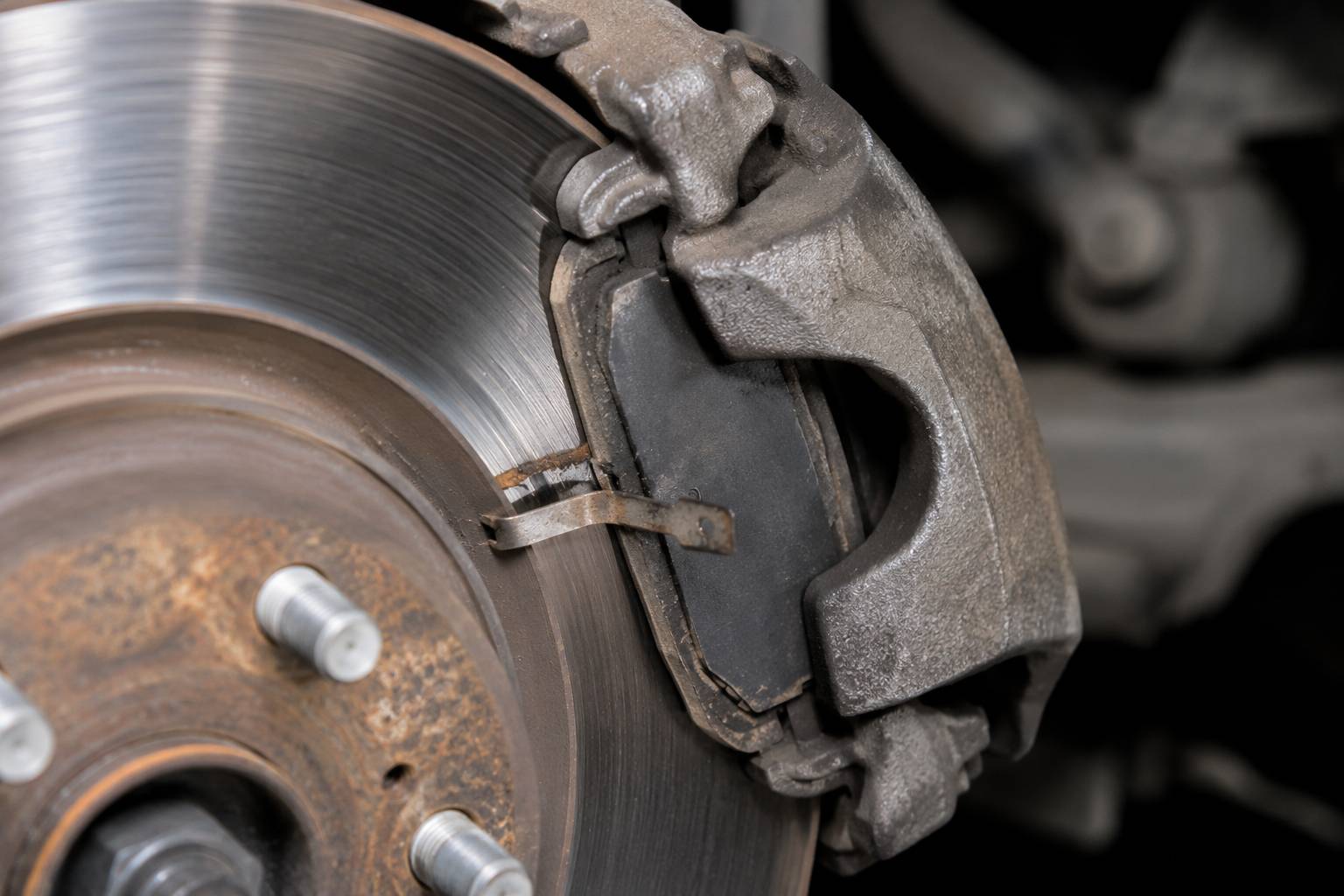
The metal wear indicator tab scrapes the rotor to warn you of low pad thickness
A Grinding Noise When Braking: Critical Mechanical Failure
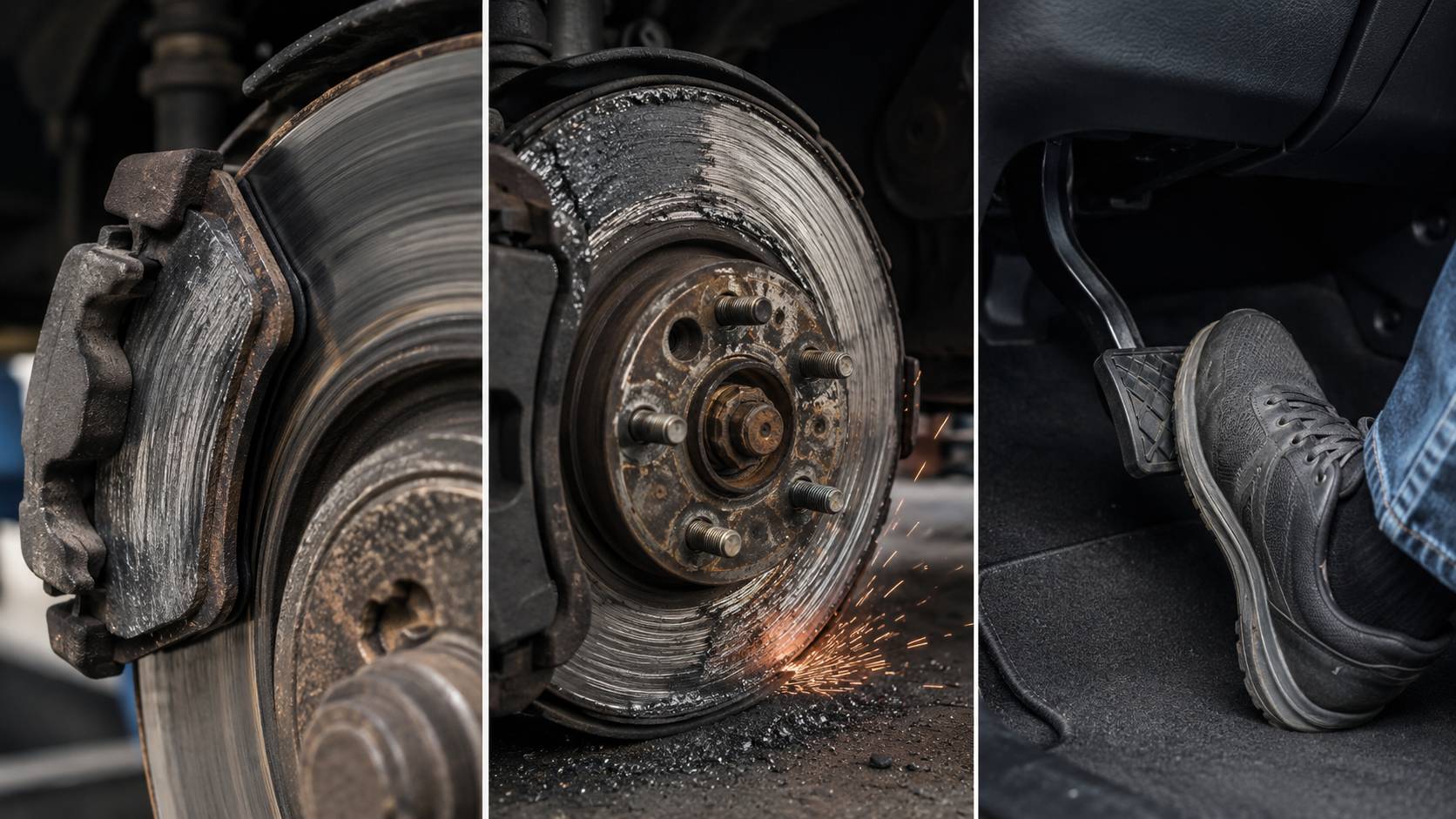
Hearing a harsh grinding noise when braking indicates a severe mechanical failure. This sound means you have completely bypassed the early warning squeal of the wear indicator. The friction material on the brake pad is entirely gone. The hydraulic caliper is now forcing the bare steel backing plate directly into the cast iron brake rotor.
This metal-on-metal contact creates deep gouges and scratches across the smooth surface of the rotor. You will often feel a harsh vibrating sensation in the brake pedal matching the rhythm of the grinding sound. The vehicle will take a terrifyingly long distance to come to a complete stop. The bare steel does not provide adequate friction to halt the heavy mass of the car.
Continuing to drive with grinding brakes destroys the rotors entirely. It generates excessive heat that can boil the brake fluid and melt the rubber seals inside the caliper housing. You must immediately secure professional Brake System Maintenance and Repair if your vehicle makes a grinding noise. The vehicle is actively destroying its own structural components every time you press the pedal.
The Danger of a Spongy Brake Pedal
Not all brake warnings are auditory. A spongy brake pedal repair scenario involves a failure within the hydraulic system rather than the mechanical friction components. A healthy brake pedal feels firm and provides immediate resistance when you press it. A spongy pedal feels soft and travels unusually close to the floorboard before the vehicle begins to slow down.
This dangerous condition almost always points to an issue with the brake fluid. Brake fluid is highly hygroscopic. It naturally pulls moisture directly out of the humid Hawaii air. Pure brake fluid boils at a very high temperature to withstand the heat generated by the brake calipers. Water boils at a much lower temperature.
The extreme heat generated by heavy braking transfers into the contaminated fluid. The trapped water turns into steam. You cannot compress a liquid, but you can compress a gas. The spongy feeling is your foot compressing the trapped steam bubbles inside the brake lines instead of clamping the brake pads.
Air can also enter the system through a failing rubber hose or a leaking caliper seal. The National Highway Traffic Safety Administration (NHTSA) recommends flushing the hydraulic brake fluid completely every two years to prevent moisture accumulation and ensure maximum hydraulic pressure.
Diagnosing Brake Symptoms by Sound and Feel
Identifying the specific symptom helps technicians locate the failing component much faster. Use this diagnostic table to understand what your vehicle is trying to tell you.
| Warning Symptom | Likely Mechanical Cause | Safety Risk Level |
|---|
| High-Pitched Squeal | Wear indicator tab touching the rotor or glazed pads. | Moderate. Requires inspection soon. |
| Harsh Grinding Noise | Friction material completely gone. Bare metal contact. | Severe. Do not drive at highway speeds. |
| Spongy Pedal Feel | Moisture boiling in the brake lines or a hydraulic leak. | Severe. Vehicle may lose total braking power. |
| Steering Wheel Shaking | Brake rotors warped from extreme heat cycles. | Moderate. Increases stopping distance. |
| Vehicle Pulls to One Side | A seized brake caliper holding one pad against the rotor. | High. Can cause loss of steering control. |
Frequently Asked Questions About Brake Noises
Is it normal for my brakes to squeal first thing in the morning? A brief squeal when you first drive in the morning is common in Hawaii. The high overnight humidity allows a thin layer of surface rust to form on the cast iron rotors. The brake pads scrape this rust off during your first few stops. If the squealing continues throughout your entire commute, you likely need a professional brake inspection to check your pad thickness.
Can I just replace the brake pads if I hear a loud grinding noise? No. A grinding noise indicates the friction material is entirely gone. The bare metal backing plate is now gouging the cast iron rotor. Replacing just the pads will not fix the deep scratches on the rotor surface. New pads placed on a damaged rotor will wear out extremely fast and fail to stop the vehicle properly. You will need to replace the rotors as well.
How long can I safely drive after my brakes start squeaking constantly? You should schedule an inspection within a few days of hearing a constant squeal. The acoustic wear indicator tab is designed to alert you when roughly two millimeters of friction material remain. Driving for several more weeks will wear the pad down to the bare metal and cause severe damage to the rest of the braking system.
Why does my brake pedal feel soft and spongy? A spongy pedal usually points to air bubbles or trapped moisture inside the hydraulic brake lines. Brake fluid absorbs moisture directly from the humid island air over time. The heat from braking boils this water into steam. A mechanic must flush the old fluid and bleed the hydraulic lines to restore a firm pedal feel.
Why does my steering wheel shake violently when I apply the brakes? Steering wheel vibration during braking points to warped brake rotors. Extreme heat from driving in heavy stop-and-go traffic alters the perfectly flat surface of the cast iron disc. As the caliper squeezes the warped spinning rotor, the uneven pressure travels back through the steering column. The rotors require replacement to restore smooth stops.
Why Oahu Drivers Need Frequent Brake Inspections
The island environment aggressively attacks your braking system. High humidity introduces moisture into your hydraulic fluid faster than in dry climates. Coastal salt air causes the steel caliper slide pins to rust and seize. The steep descents found across the island push the thermal limits of your brake pads daily.
Visual inspections from your driveway cannot reveal the true condition of your braking system. You cannot see the inner brake pad wearing down without physically removing the wheel and the caliper housing. You cannot determine the moisture content of your brake fluid without using a specialized digital testing pen. Professional inspections provide the precise data required to keep your vehicle safe.
Expert Brake Repair You Can Trust
Your braking system is your primary defense against accidents on the road. Tuning out strange noises or adapting to a soft brake pedal puts you and your passengers at extreme risk. If your vehicle is exhibiting any of the warning signs discussed above, the mechanical damage is already occurring.
Bring your vehicle to the ASE-certified technicians at Pearl City Auto Works. We utilize digital metric gauges to measure your remaining pad thickness accurately. We test your hydraulic fluid for moisture contamination. We provide clear, photograph-backed inspection reports so you can make informed decisions about your vehicle maintenance. Protect your safety by addressing brake noises immediately.
Book a no contact appointment