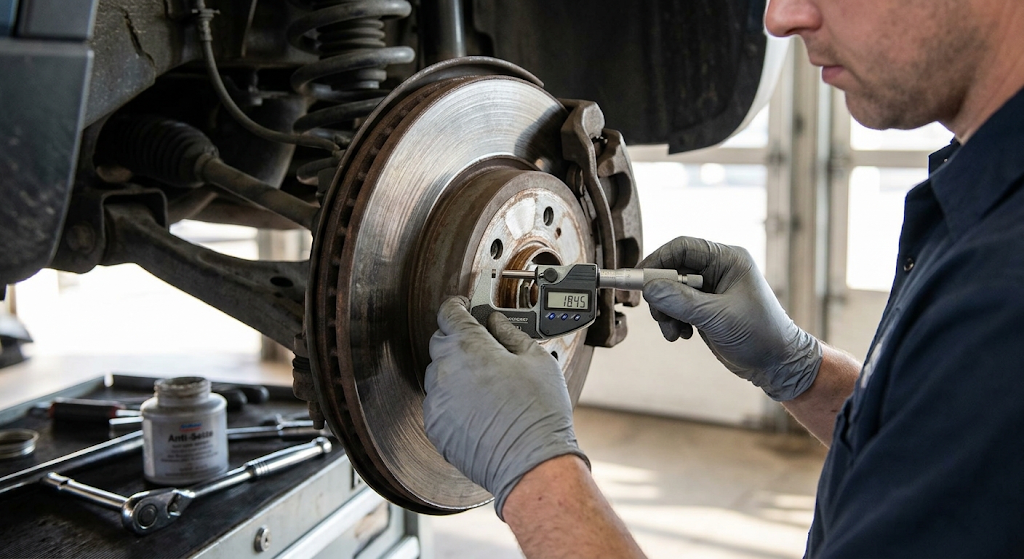
You know you need auto brake repair when you hear high-pitched squealing, feel steering wheel vibrations during slowing, experience a spongy brake pedal, or notice increased stopping distances on island roads. Ignoring these warning signs compromises your ability to stop safely in emergency situations, accelerates damage to expensive brake rotors and calipers, and increases overall repair costs.
At Pearl City Auto Works, we understand how Oahu's coastal climate and driving conditions affect your vehicle's braking system. Constant stop-and-go traffic along the H-1 corridor, downhill driving on mountain passes like the Pali Highway, and heavy salt air moisture create a challenging environment for brake friction materials and hydraulic components. Timely brake service protects you and your passengers while preserving your vehicle's value.
7 Critical Warning Signs Your Brakes Need Immediate Service
Your braking system rarely fails without warning. Catching these early red flags prevents major component failure and keeps your vehicle safe on island roads:
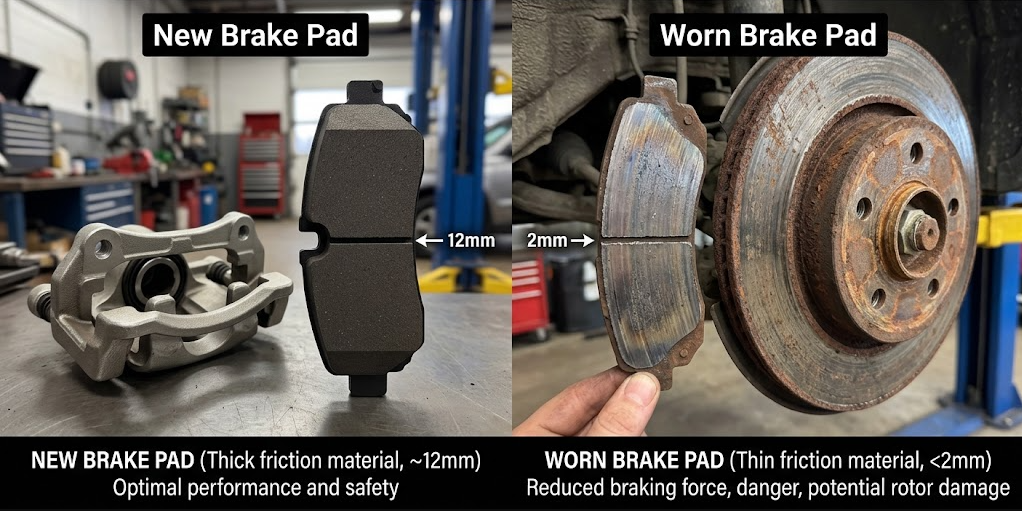
- High-Pitched Squealing or Screeching: Built-in metallic wear indicators on brake pads make contact with the rotor to alert you that pad material is depleted.
- Harsh Metallic Grinding: Severe metal-on-metal contact occurring when friction pads wear down completely, gouging the brake rotor surface.
- Steering Wheel Vibration or Pulsation: Warped brake rotors caused by intense heat buildup, causing uneven surface contact when pressing the brake pedal.
- Spongy or Soft Pedal Feel: Hydraulic pressure loss caused by air in the brake lines, degraded fluid, or a failing brake master cylinder.
- Vehicle Pulling to One Side: A sticking caliper piston or uneven pad wear causing asymmetric braking pressure across the front axle.
- Burning Chemical Odor: Overheated brake pads or stuck calipers generating harsh friction odors after repeated hard stops.
- Dashboard Brake Warning Light: An illuminated ABS light or red brake warning indicator on your instrument cluster.
Safety Warning: If your brake pedal sinks to the floorboard or your dashboard brake warning light stays illuminated, pull off the road safely. Operating a vehicle with compromised hydraulic pressure is extremely dangerous.
Anatomy of Your Vehicle's Braking System
Modern automotive braking systems rely on hydraulic pressure and precise mechanical friction to convert kinetic energy into thermal energy. Understanding how these parts interact helps you make informed repair decisions.
| Component | Function | Failure Symptoms | Typical Service Solution |
|---|
| Brake Pads | Provide friction against rotors to slow wheel rotation | Squealing, thin pad friction material, low stopping power | Replace front or rear brake pad sets |
| Brake Rotors | Metal discs attached to wheel hubs that pads clamp onto | Pulsation, steering wheel vibration, deep surface grooves | Resurface (turn) or replace rotors |
| Brake Calipers | Hydraulic clamps housing pistons that force pads against rotors | Vehicle pulling to one side, fluid leaks, drag | Rebuild or replace caliper assembly |
| Brake Lines & Hoses | Transport pressurized hydraulic fluid from master cylinder | Soft pedal feel, visible fluid drips near wheels | Flushes, line replacement, bleeding system |
| Brake Fluid | Hygroscopic fluid transferring pedal force through hydraulic lines | Dark discolored fluid, spongy pedal response | Complete hydraulic brake fluid flush |
| ABS Sensors | Monitor wheel speed to prevent lockup during panic stops | ABS light illuminated, loss of anti-lock function | Replace wheel speed sensors |
Why Oahu Driving Accelerates Brake Wear
Driving on Oahu presents unique stress factors for braking systems compared to mainland driving environments. Ocean air carries airborne salt particles that coat exposed metal surfaces, accelerating surface rust on brake rotors and seizing slider pins inside calipers.
Daily commutes through Honolulu traffic force drivers into frequent braking cycles. Stop-and-go conditions prevent brake components from cooling efficiently between stops, leading to thermal expansion and accelerated pad degradation. Steep descents down the H-3 or Tantalus drive require sustained braking pressure, generating temperatures exceeding 600°F inside the wheel assembly.
According to vehicle safety studies from the National Highway Traffic Safety Administration, properly maintained braking systems significantly reduce stopping distances and reduce collision risks. Additionally, state motor vehicle standards monitored by the Hawaii Department of Transportation require functional braking systems to pass annual safety evaluations.
How Pearl City Auto Works Diagnoses and Repairs Brakes
We take a transparent, thorough approach to brake maintenance and repairs. Our certified technicians follow a precise diagnostic protocol to pinpoint issues before performing any work on your car.
Our 4-Step Brake Service Process
- Digital Brake Health Inspection: We remove all four wheels to measure brake pad thickness, evaluate rotor condition with precision micrometers, check caliper slide pins, and test fluid moisture content. High-resolution photos and diagnostic notes are sent directly to your phone.
- Comprehensive Diagnostic Report: We explain our findings in plain language, categorizing items by urgency so you know exactly what requires immediate attention and what can wait for future visits.
- Upfront Transparent Pricing: You receive a clear cost estimate before any work begins. Check our available auto repair coupons to find savings on routine maintenance and brake services.
- Precision Installation & Road Test: We install original-equipment quality parts, apply anti-squeal lubrication, bleed hydraulic lines, and perform a real-world road test to verify proper stopping performance.
Keeping your vehicle running smoothly requires routine care. We service a wide range of cars, crossovers, trucks, and SUVs across the island. Review our full list of supported serviced vehicles to learn more about our shop capabilities.
Disc Brakes vs. Drum Brakes: Key Differences
While most modern vehicles use disc brakes on all four wheels, many trucks and compact cars still utilize drum brakes on the rear axle. Here is how they compare:
Disc Brake Systems
Disc brakes use a hydraulic caliper to squeeze friction pads against a rotating metal rotor. They offer superior heat dissipation, making them less susceptible to thermal brake fade during heavy mountain driving. They also shed water quickly, making them ideal for heavy rain conditions common on Oahu's windward side.
Drum Brake Systems
Drum brakes use hydraulic wheel cylinders to push curved brake shoes outward against the inside of a spinning metal drum. While drum brakes are cost-effective and provide durable parking brake performance, they trap heat and water easily, requiring periodic manual adjustment and cleaning to prevent shoe drag.
Preventative Brake Care Tips for Local Drivers
Extending the lifespan of your brake pads and rotors comes down to driving habits and proactive upkeep:
- Practice Coasting: Anticipate traffic stops ahead on the H-1 and ease off the accelerator early rather than slamming on the brakes at the last moment.
- Avoid Riding the Brakes: When descending steep hills like the Pali, downshift into a lower gear to let engine braking manage your downhill speed.
- Flush Brake Fluid Regularly: Brake fluid absorbs environmental moisture over time, lowering its boiling point and causing internal rust inside calipers. Flush fluid every two years or 24,000 miles.
- Keep Wheels Clean: Washing off brake dust and road salt prevents corrosive buildup on caliper hardware and slider pins.
- Schedule Regular Safety Checks: Have your brakes inspected during every tire rotation or oil change to catch uneven pad wear early.
What Local Oahu Drivers Are Saying
We take pride in providing reliable brake services, honest recommendations, and clear communication to drivers in Aiea and across Oahu. Here is feedback shared by our local customers:
"Honest and dependable auto repair. They keep you updated with photos and detailed reports on your vehicle. Very friendly customer service!"
Mark, Local Customer
"Great customer service and turnaround time! Shay and the team were super helpful explaining what my vehicle needed without pressure."
Kalei, Local Customer
Learn more about our local shop history, team, and commitment to quality repair work by visiting our about us page.
Frequently Asked Questions
How often should I get my brakes inspected?
We recommend having your braking system inspected at least once every 6,000 to 12,000 miles, or whenever you get your tires rotated or motor oil changed.
How long do brake pads typically last on Oahu?
Brake pads on Oahu usually last between 25,000 and 45,000 miles. Frequent stop-and-go driving, heavy loads, and humid coastal air cause faster wear compared to long-distance highway driving on the mainland.
Do I need to replace rotors every time I change brake pads?
Not always. If your rotors meet minimum thickness specifications, have no deep scoring, and show no heat warping, they can often be resurfaced. However, replacing pads and rotors together ensures optimal stopping power and eliminates noise.
Why do my brakes squeak in the morning?
A light layer of surface rust often forms on steel brake rotors overnight due to Oahu's humid air. This surface rust typically brushes off harmlessly after the first few stops of your morning commute.
What causes a spongy brake pedal?
A soft or spongy brake pedal usually indicates air trapped inside the hydraulic lines, contaminated brake fluid with high moisture content, or a leaking master cylinder. This requires immediate professional attention.
Schedule Your Brake Inspection Today
Do not compromise on your safety or wait for squeaking to turn into costly rotor damage. Our team at Pearl City Auto Works is ready to inspect, diagnose, and repair your brakes with clear digital reports at every step.
BOOK A NO-CONTACT APPOINTMENT