You turn into a parking space, pull out of your driveway, or make a slow turn at an intersection when you hear it: click, click, click.
The noise may disappear once you straighten the steering wheel. Sometimes it happens only during sharp turns. Other times, you hear a pop or clunk even when the vehicle is barely moving.
A clicking noise when turning can come from several components, including CV joints, steering parts, and suspension components. The timing and type of sound can provide useful clues, but they don't identify the problem on their own.
At Pearl City Auto Works, we help drivers in Aiea, Pearl City, and surrounding Oahu communities investigate unusual steering and suspension symptoms.
Here's what you should know if your car has started making noise during turns.
Why Your Car Makes Clicking Noises During Turns
When you turn the steering wheel, several parts of your vehicle move or change position.
The steering system directs the wheels, while the suspension allows them to move over uneven pavement. On vehicles equipped with CV axles, the joints also accommodate changes in wheel angle while transmitting power.
These systems must work together smoothly.
If a joint becomes worn, a protective boot tears, or a component develops excessive movement, you may hear clicking, popping, or clunking.
The sound can vary depending on whether you're accelerating, turning sharply, driving over a bump, or moving the steering wheel while parked.
That's why describing exactly when the noise occurs is often more helpful than simply saying your car makes a clicking sound.
Common Causes of Clicking and Popping Noises When Turning
1. Worn CV Joints or Damaged CV Boots
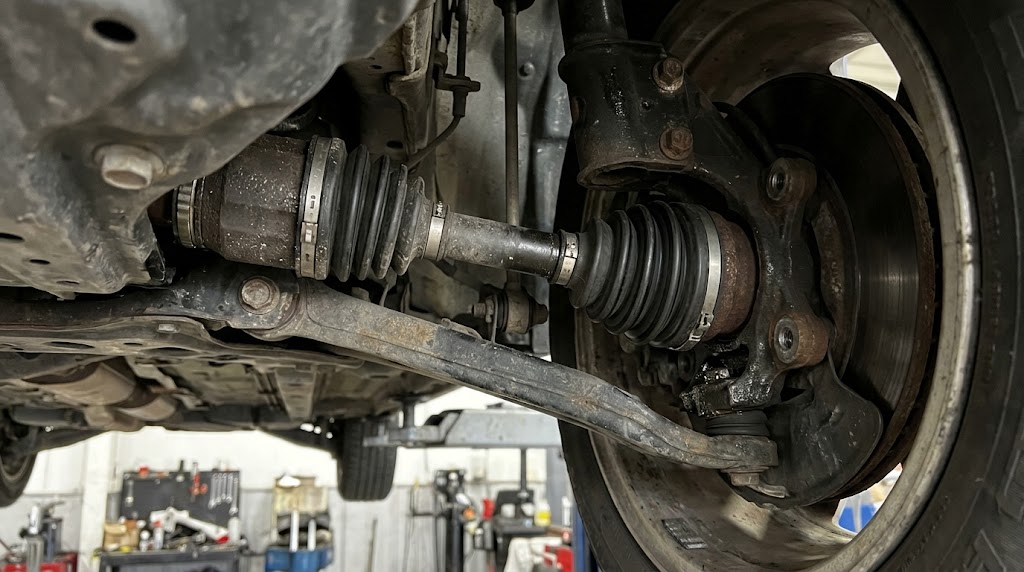
A constant velocity (CV) joint helps transmit power through a rotating axle while accommodating changes in angle.
On many front-wheel-drive vehicles, outer CV joints allow the driven wheels to turn while continuing to receive power.
As a CV joint wears, it may produce a repetitive clicking or popping noise during turns, particularly when accelerating with the wheels turned sharply.
You might notice the sound when:
- Pulling out of a parking space.
- Making a tight turn at low speed.
- Turning onto another street while accelerating.
- Performing a U-turn.
CV joints are protected by flexible rubber boots that help retain grease and keep contaminants out.
If a boot cracks or tears, grease can escape while water, dirt, and road debris enter the joint. Over time, inadequate lubrication or contamination may contribute to joint wear.
One visible clue is grease around the inside of a wheel or on nearby components.
A damaged boot doesn't automatically mean the joint needs replacement, but it deserves inspection before additional damage develops.
2. Worn Steering Components
Your steering system contains linkages and joints that transfer steering-wheel movement to the road wheels.
Components such as tie-rod ends can wear or develop looseness.
Depending on the problem, you might notice knocking or popping sounds along with changes in steering response.
Other possible symptoms include:
- Excessive movement or looseness in the steering wheel.
- Difficulty keeping the vehicle traveling straight.
- Uneven tire wear.
- Changes in how the vehicle responds when turning.
Because steering problems can affect vehicle control, unusual noises accompanied by looseness or unpredictable handling should be addressed promptly.
3. Suspension Joints, Bushings, and Mounts
Not every noise during a turn comes from the steering system.
Suspension components also move as the vehicle changes direction, shifts weight, and travels over uneven pavement.
Worn ball joints, damaged bushings, or deteriorated strut mounts may produce popping, knocking, or creaking sounds.
You may notice these noises when entering a sloped driveway, turning over uneven pavement, or maneuvering slowly through a parking lot.
The exact cause depends on the vehicle's suspension design and the condition of its components.
Some noises that seem to come from the steering system may originate near the wheel or brake assembly.
Loose or damaged components can sometimes produce clicking or knocking that changes with wheel movement.
A sound that begins shortly after wheel or brake work deserves particular attention.
If you suspect a loose wheel or experience severe vibration or instability, avoid driving until the vehicle can be checked safely.
What the Type of Noise Can Tell You
The sound itself doesn't confirm which component needs repair. However, its pattern can help narrow down the possibilities.
| What You Notice | Possible Area to Investigate |
|---|
| Repeated clicking during a sharp turn while accelerating | CV joint or related drivetrain components |
| Popping when turning the steering wheel while parked | Steering joints, suspension mounts, or related components |
| Clunking while turning over bumps | Suspension joints, bushings, or links |
| Clicking accompanied by loose steering | Steering linkage or related suspension components |
| Clicking after recent wheel or brake work | Wheel or brake components requiring inspection |
These are possible explanations, not definitive diagnoses.
For example, a repetitive click during acceleration and a single clunk when entering a driveway may involve completely different systems.
Clicking While Turning vs. Clicking While Driving Straight
Pay attention to whether the sound occurs only when the wheels are turned.
If the clicking happens during sharp turns but disappears when driving straight, the change in wheel angle may be relevant.
If the sound continues while traveling straight, the cause may involve another rotating component or a problem unrelated to steering angle.
Similarly, a noise that occurs while the vehicle is stationary may suggest a different issue than one that appears only when the wheels are rotating.
These distinctions can help a technician decide which components to examine.
When a Clicking Noise Becomes a Safety Concern
A clicking noise doesn't automatically mean your vehicle is unsafe to drive, but it shouldn't be ignored simply because the car still moves normally.
Some problems begin with a relatively minor sound before other symptoms appear.
Arrange a professional inspection promptly if the clicking is persistent, worsening, or accompanied by other changes.
Pay particular attention to:
- Steering that suddenly becomes loose or difficult.
- A vehicle that pulls unexpectedly.
- Strong vibrations or unusual wheel movement.
- Grinding or heavy knocking.
- A visibly damaged tire or wheel.
- A noticeable change in vehicle control.
If steering becomes unpredictable or the vehicle is difficult to control, stop driving when it is safe and arrange appropriate assistance.
Avoid repeatedly making tight turns to reproduce a severe noise. Continuing to stress a potentially damaged component may make the problem worse.
What to Note Before Scheduling an Inspection
You don't need to diagnose the problem yourself before contacting a repair shop.
However, a few observations can help explain what's happening.
Consider these questions:
- Turning direction: Does the clicking happen during left turns, right turns, or both?
- Vehicle speed: Is it most noticeable during parking maneuvers or at higher speeds?
- Acceleration: Does the sound occur while applying power or while coasting?
- Recent events: Did it begin after hitting a pothole or following recent vehicle service?
- Other symptoms: Have you noticed vibration, unusual tire wear, changes in steering feel, or grease near a wheel?
You can also record the sound from inside the vehicle if it can be done safely by a passenger.
Avoid crawling beneath the vehicle or attempting to move steering and suspension components without appropriate equipment.
How Professional Diagnosis Helps Identify the Cause
Because several systems can produce similar noises, identifying the source requires more than guessing which part sounds worn.
At Pearl City Auto Works, we provide Steering Repair and Suspension Repair and Replacement for drivers experiencing unusual noises, looseness, and handling concerns.
Depending on the vehicle and symptoms, evaluating a turning-related noise may involve checking accessible steering joints, suspension components, protective boots, mounting points, and related areas.
If the sound appears to come from the drivetrain, further investigation may be needed to determine the cause and appropriate repair options.
Our team considers the symptoms and inspection findings before recommending work.
We explain what we find and review the proposed repairs with you. Additional repair work is not performed without your authorization.
A clicking sound doesn't automatically mean you need a wheel alignment, new suspension parts, or a CV axle replacement. The appropriate next step depends on identifying the actual problem.
Schedule Steering or Suspension Service in Aiea, HI
If your car makes unusual clicking, popping, or clunking noises during turns, we're here to help you understand what may be causing them.
At Pearl City Auto Works, we help drivers in Aiea, Pearl City, and surrounding Oahu communities make informed decisions about their vehicle repairs.
Our shop is located at 98-025 Hekaha St, Aiea, HI 96701.
If you need transportation during service, ask about our loaner vehicles and shuttle service to neighboring towns. Availability and arrangements should be confirmed when scheduling.
Hearing clicking or popping when you turn? Contact us to discuss your symptoms and schedule an appropriate inspection at our Aiea shop.
BOOK A NO-CONTACT APPOINTMENTCONTACT US TODAY!