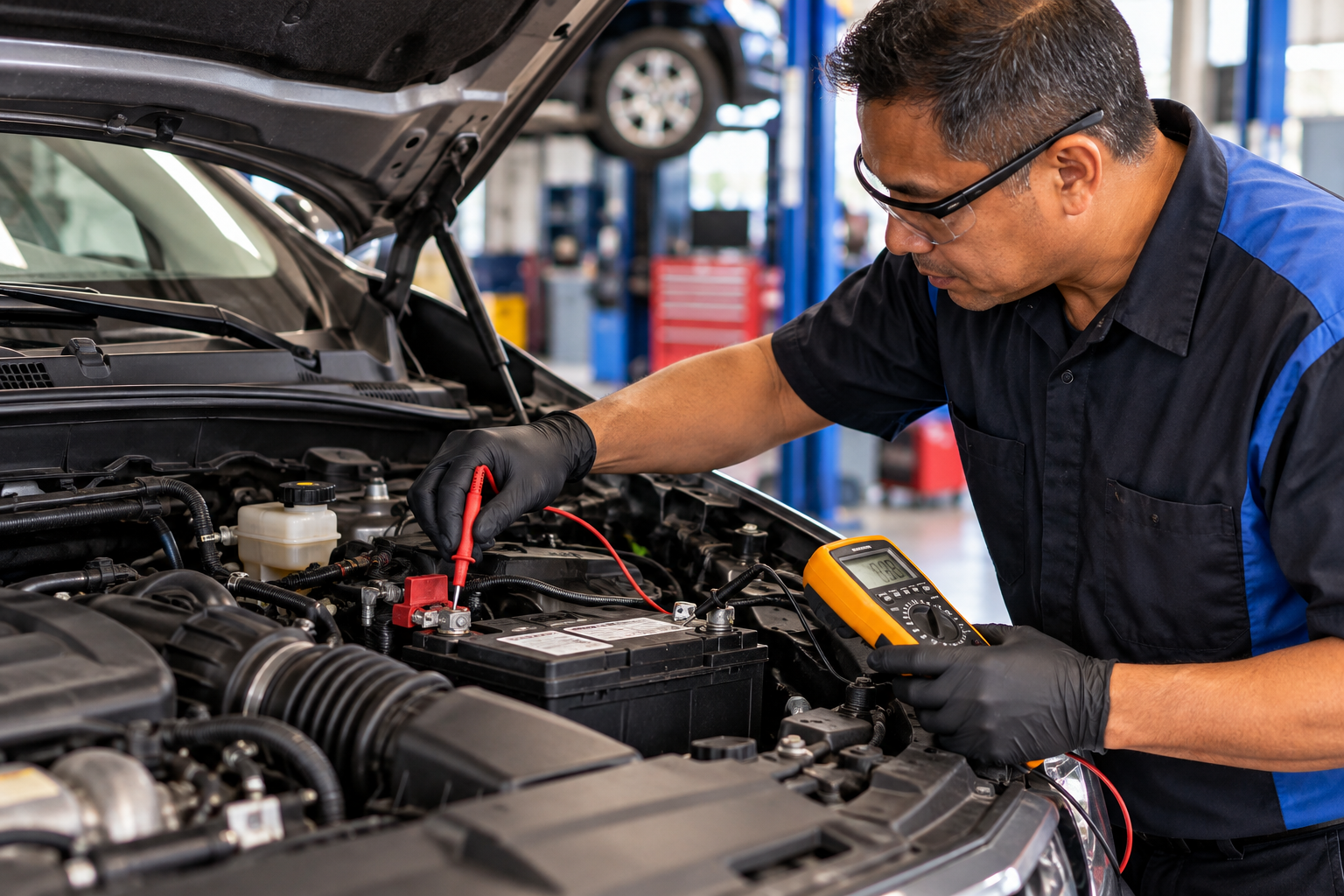
You turn the key or press the start button, but your car won't start. Maybe you hear clicking, the dashboard lights come on without the engine turning over, or the vehicle starts with a jump but won't restart later.
These symptoms can point to different problems. While a weak battery is one possibility, the starter, alternator, or another electrical component could also be responsible.
At Pearl City Auto Works, we help drivers in Aiea, Pearl City, and surrounding Oahu communities investigate starting and electrical problems. Understanding what happens when you try to start your vehicle can help you explain the issue and avoid replacing parts unnecessarily.
Here's how to recognize possible battery, starter, and alternator problems, what you can safely check, and when professional diagnostics may be needed.
What Happens When Your Car Won't Start?
The first clue is how your vehicle responds when you attempt to start it.
Does the engine turn over slowly? Do you hear a clicking sound? Or does the engine crank normally without starting?
| What you notice | Possible cause |
|---|
| Rapid clicking when starting | Weak battery or poor electrical connection |
| One solid click without cranking | Starter circuit, starter motor, or battery problem |
| No sound or dashboard lights | Discharged battery or electrical power issue |
| Dashboard lights work, but the engine won't crank | Starter circuit, battery, or control-system fault |
| Engine cranks normally but won't start | Ignition, fuel delivery, or engine-management issue |
| Starts with a jump but won't restart later | Battery, charging system, or electrical connection problem |
| Battery warning light appears while driving | Possible charging-system problem |
These are possible explanations, not confirmed diagnoses. Different faults can produce similar symptoms.
One important distinction is cranking versus starting. Cranking means the starter is turning the engine. If the engine turns over normally but never begins running, the issue may involve a different system.
Signs Your Car Battery May Be the Problem
Your battery supplies the electrical power needed to start most conventional gasoline-powered vehicles. When it cannot provide sufficient power, the starter may struggle to turn the engine.
Common signs of a weak or discharged battery include:
- Rapid clicking when attempting to start.
- Slow or labored engine cranking.
- Dashboard lights that dim significantly during starting.
- Electrical accessories that operate inconsistently.
- A vehicle that starts after a jump but struggles again later.
A battery may be discharged, aging, or unable to deliver sufficient starting power. Loose or corroded connections can produce similar symptoms, even when the battery itself is still usable.
Does a Jump-Start Mean You Need a New Battery?
Not necessarily.
A successful jump-start tells you that additional electrical power helped the vehicle start. It doesn't confirm that the battery itself has failed.
The problem could involve a weak battery, poor connections, or a charging-system fault.
If your vehicle starts after a jump, avoid assuming that replacing the battery will solve the problem without further testing.
Our Electrical System Repair service addresses starting and charging concerns, including problems involving electrical connections and related circuits.
Signs Your Starter Motor May Be Failing
The starter motor turns the engine when you start your vehicle. It relies on electrical power from the battery and a functioning starter control circuit.
If the starter or its associated circuit isn't operating correctly, the engine may not crank even when the dashboard lights appear normal.
Possible starter-related symptoms include:
- A single click when turning the key or pressing the start button.
- No engine cranking despite working dashboard lights.
- Intermittent starting problems.
- Grinding or unusual mechanical noises during starting.
However, these symptoms don't automatically mean the starter motor needs replacement.
For example, a weak battery or poor electrical connection may prevent enough power from reaching the starter.
Why Starter Testing Matters Before Replacement
Replacing the starter without identifying the actual problem can lead to unnecessary repair expenses.
A damaged cable, faulty relay, or poor ground connection may cause symptoms similar to a failed starter motor.
Depending on the vehicle, diagnosis may involve checking battery condition, evaluating electrical connections, and testing the starter circuit.
At our Aiea shop, we provide electrical diagnostics to help determine the cause before discussing recommended repairs.
Signs Your Alternator May Be the Problem
The alternator supplies electrical power while the engine is running and helps recharge the battery.
When the charging system isn't functioning properly, the vehicle may continue operating on stored battery power until that charge becomes insufficient.
Possible signs of an alternator or charging-system problem include:
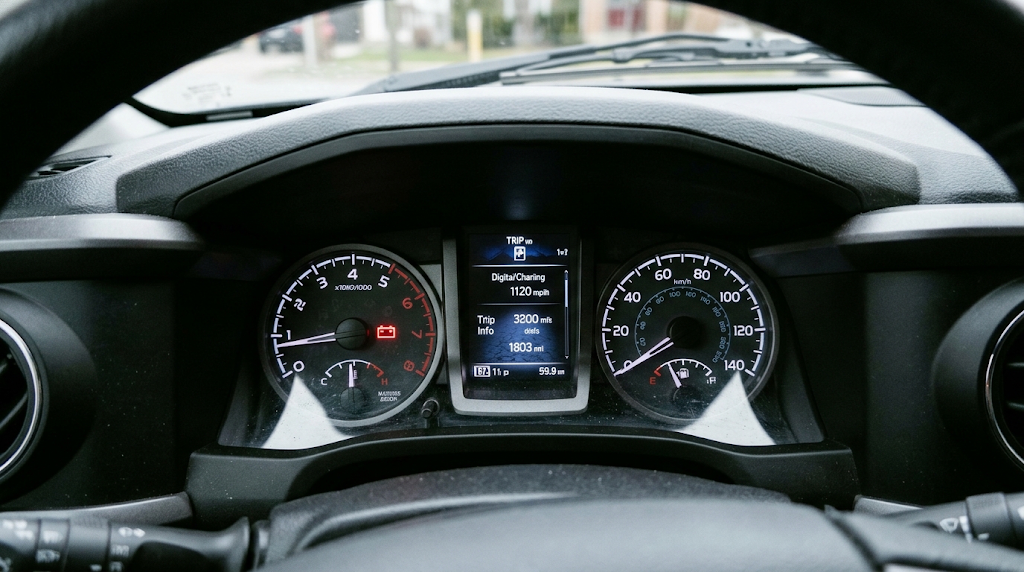
- An illuminated battery or charging-system warning light.
- Headlights that dim or fluctuate in brightness.
- Electrical accessories behaving inconsistently.
- A vehicle that won't restart after being driven.
- An engine that stalls because electrical power becomes insufficient.
Can a Bad Alternator Prevent Your Car From Starting?
Yes, although the alternator usually isn't responsible for directly turning the engine during startup.
If the charging system fails to replenish the battery, the battery may eventually lack enough power to operate the starter.
For example, your vehicle might start normally before a short drive but fail to restart after you park.
However, a battery warning light or discharged battery doesn't automatically prove the alternator is defective. Wiring, connections, or other charging-system components may also be involved.
Testing helps determine which component needs attention rather than replacing the alternator based on symptoms alone.
What You Can Safely Check Before Requesting Repairs
You don't need specialized equipment to gather useful information about a starting problem.
A few observations can help you describe the symptoms when requesting service.
1. Listen to the starting attempt.
Notice whether the engine cranks slowly, clicks repeatedly, makes a single click, or produces no sound.
2. Observe the dashboard lights.
Check whether the lights illuminate normally and whether they become unusually dim when you attempt to start the vehicle.
3. Look for visible battery problems.
If the battery is safely accessible, look for obvious corrosion, damaged cables, or loose connections without touching or disconnecting components.
Do not handle a battery that appears swollen, cracked, leaking, or unusually hot.
4. Think about what happened before the problem.
Did the vehicle sit unused for several days? Was an accessory left on? Did a charging-system warning light appear during your previous drive?
These details may help narrow down the issue.
When to Stop Trying to Start the Vehicle
Avoid repeated starting attempts if you hear grinding noises or notice signs of electrical overheating.
Never disconnect the battery while the engine is running to test the alternator. This outdated method can damage vehicle electronics.
If you notice smoke, a strong burning smell, or battery damage, stop attempting to start the vehicle and arrange appropriate assistance.
If the engine stalls while driving or the charging-system warning light remains illuminated, avoid continuing to drive until the problem can be evaluated.
What If the Engine Cranks but Still Won't Start?
Not every no-start problem involves the battery, starter, or alternator.
If the engine cranks at its normal speed but doesn't begin running, the starting system may be functioning while another system prevents the engine from operating.
Possible causes include ignition faults, fuel-delivery problems, engine sensors, or electronic control issues.
For example, an engine may crank normally but fail to start because it isn't receiving the fuel or ignition conditions needed to run.
Our Engine Diagnostics and Repair service addresses hard starting, stalling, and other engine-performance concerns.
We also provide Computer Diagnostics when vehicle sensors, electronic modules, or communication systems require investigation.
Identifying whether the engine cranks normally helps determine which systems should be evaluated.
How We Approach Starting Problems at Pearl City Auto Works
When you bring a starting concern to our Aiea shop, we focus on understanding the symptoms and identifying the underlying issue before discussing repair options.
Depending on your vehicle and the problem, diagnostic work may involve evaluating battery condition, inspecting electrical connections, testing starting and charging circuits, or reviewing information from the vehicle's electronic systems.
Different vehicles require different diagnostic approaches, and similar symptoms don't always have the same cause.
Our shop uses multiple diagnostic scanners and updated diagnostic software to investigate electrical and engine-performance concerns.
We also believe you should understand what your vehicle needs before authorizing repairs.
If additional diagnostic testing is necessary, we'll explain the next steps. Diagnostic services may be billed in time increments, depending on the work required.
We discuss our findings and recommended repairs with you, and no additional repairs are performed without your authorization.
Get Your Starting Problem Properly Diagnosed
A clicking sound, weak battery, or engine that won't crank can have several possible causes. Identifying the responsible system helps avoid replacing parts that may still be functioning properly.
At Pearl City Auto Works, we provide electrical and engine diagnostics to help determine what's preventing your vehicle from starting.
Our shop is located at 98-025 Hekaha St, Aiea, HI 96701, serving drivers from Pearl City and surrounding Oahu communities.
If you need transportation while your vehicle is being serviced, ask about our loaner vehicles or shuttle service to neighboring towns. Availability and arrangements should be confirmed when scheduling.
If your vehicle cannot be driven safely, arrange appropriate assistance rather than attempting to drive it to the shop.
Before scheduling, you can also view our current service specials and coupons. Check the terms and eligibility of any offer, and ask our team whether it applies to your appointment.
Need help with a car that won't start?
BOOK A NO-CONTACT APPOINTMENTCONTACT US TODAY!