For modern vehicles, a tune-up means performing targeted, preventive replacement of essential wear components including spark plugs, engine filters, and ignition coils alongside computer diagnostic scans, rather than manually adjusting mechanical engine parts.
Because modern cars rely on an Engine Control Unit (ECU) to automatically calibrate timing and fuel ratios thousands of times per second, traditional manual tuning no longer exists. At Pearl City Auto Works, we define a modern tune-up as proactive maintenance designed to address worn or overdue components before they lead to larger engine-performance problems.
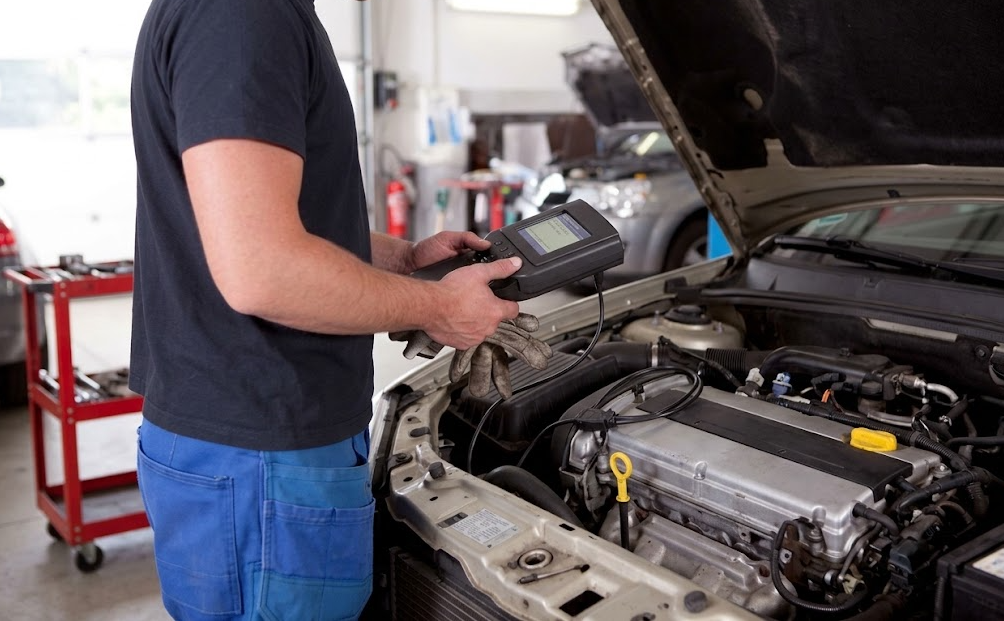
Modern diagnostic computer scan
Your check engine light just flashed on while driving past Pearlridge Center, or maybe your car hesitates right when you try to merge onto the H-1 freeway. When you bring your car to a shop, someone mentions you might need a tune-up. What does that actually mean for a 2018 or newer vehicle?
The phrase tune-up originated in the carburetor era, but the service itself has evolved dramatically. Understanding what a modern tune-up includes, along with what your specific vehicle requires, keeps you from paying for unnecessary work while ensuring you do not skip critical maintenance.
Pearl City Auto Works is a locally owned, second-generation family business serving Aiea, Pearl City, and surrounding Oahu communities.. This guide breaks down exactly what goes into modern engine maintenance so you can make confident decisions for your car.
What a Tune Up Means for Modern Vehicles
Before the 1990s, when electronic fuel injection became standard, tune-ups meant manually adjusting carburetors, replacing distributor points, and setting ignition timing. Mechanics literally turned screws to tune how an engine ran.
Today’s computer-controlled engines do not require manual adjustment. Your car’s Engine Control Unit (ECU) manages fuel delivery and spark timing dynamically. What your vehicle actually needs over time is the preventive replacement of high-wear components that degrade due to heat, friction, or electrical stress:
- Spark plugs
- Engine air and cabin filters
- Ignition coils and boots
- PCV (Positive Crankcase Ventilation) valves
Because automotive shops use the term loosely, service packages vary widely across the island:
| Tune-Up Service Level | Typical Components & Scope | Best For |
|---|
| Basic Tune-Up | Spark plug replacement, air filter change, top off basic fluids. | Routine maintenance on simple 4-cylinder engines. |
| Comprehensive Tune-Up | Spark plugs, ignition coil testing, throttle body cleaning, PCV valve, serpentine belt inspection, full diagnostic sweep. | Major intervals (60k to 100k miles) or resolving performance issues. |
| Performance Tuning (ECU) | Custom software updates, remapping engine parameters (Not a standard tune-up). | Specialized aftermarket modifications. |
When you request a quote, we lay out the exact components included so there are zero surprises.
What's Included in Today's Tune Up Service
A baseline tune-up focuses on core ignition and intake components. Spark plugs fire millions of times between service intervals, slowly wearing down their electrical electrodes. A worn plug causes engine misfires, erratic idling, or wasted fuel. Concurrently, a clean air filter keeps harmful island dust out of your intake system.
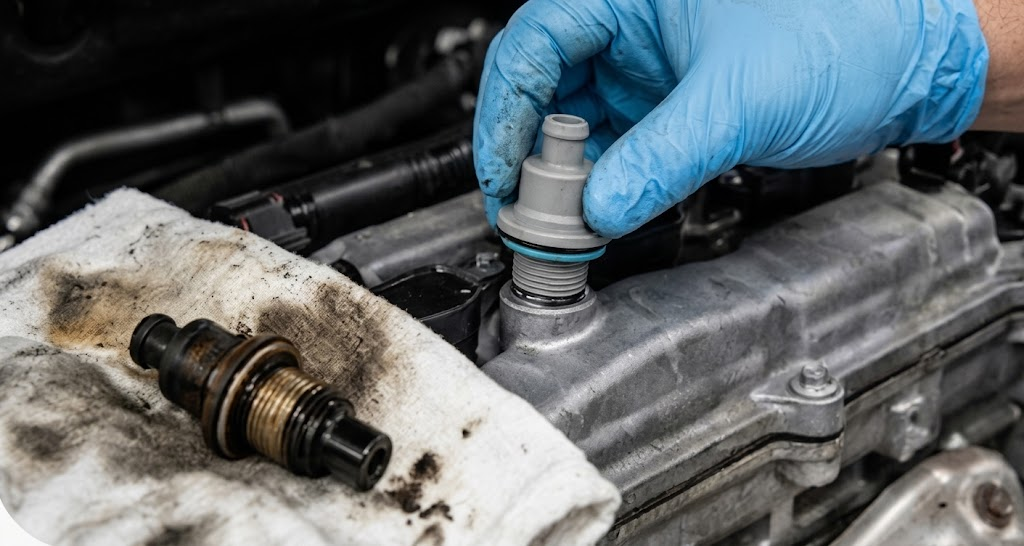
Installing a fresh PCV valve to restore balanced airflow and stop internal sludge buildup
A comprehensive tune-up dives deeper into system health:
- Ignition Coil & Boot Inspection: Coils transform battery voltage into the thousands of volts needed to spark your fuel. Thermal heat breaks down coil insulation over time.
- Throttle Body Cleaning: Carbon buildup around the throttle plate restricts air intake, causing rough idling at red lights.
- PCV Valve Replacement: Checks the crankcase ventilation system and replaces the valve when it is due or faulty.
- Serpentine Belt & Battery Testing: Checks for belt cracking and verifies battery cold-cranking amps under electrical load.
Warning Signs Your Vehicle Needs Service
You do not have to wait for a dashboard warning to know your engine needs attention. Watch for these common driving symptoms:
- Rough Idling: Your car vibrates while idling at a stoplight on Kamehameha Highway.
- Hesitation on Acceleration: A noticeable lag when accelerating onto the freeway.
- Decreased Fuel Economy: You find yourself filling up at the gas station more often without changing your daily mileage.
- Hard Starts: The engine cranks longer than usual before firing up in the morning.
Common Diagnostic Trouble Codes (DTCs)
When your Check Engine light illuminates, your car's computer stores specific diagnostic codes:
- P0300: Random or Multiple Cylinder Misfire Detected
- P0301 – P0308: Identifies an explicit cylinder misfiring (for example, P0303 indicates Cylinder 3).
- P0171 / P0174: System Too Lean. Possible causes include intake leaks, fuel-delivery problems, sensor issues, or other conditions that require diagnosis.
Maintenance Intervals for Honolulu Driving
Your vehicle owner's manual outlines two distinct service schedules: Normal and Severe. Some driving patterns common in Oahu, such as frequent short trips, heavy stop-and-go traffic, and extended idling, may fall under a manufacturer's severe-service definition.
If your daily routine involves:
- Short trips under 5 miles
- Frequent stop-and-go driving on the H-1, H-2, or Moanalua Freeway
- Extended idling with the air conditioning running
- Driving in humid ocean air environments
...then your vehicle operates under Severe Conditions.
| Component | Normal Schedule (Mainland) | Severe Schedule (Honolulu Commute) |
|---|
| Spark Plugs (Iridium/Platinum) | 100,000 Miles | 60,000 to 70,000 Miles |
| Engine Air Filter | 30,000 Miles | 15,000 to 20,000 Miles |
| Ignition System Check | 60,000 Miles | Every 30,000 Miles |
Frequent short trips prevent your engine from maintaining optimal operating temperature long enough to burn off moisture and fuel vapor in the oil. This accelerates component degradation. While long-life iridium plugs stretch further under ideal highway driving, local island driving means inspecting ignition systems earlier, typically between 60,000 and 70,000 miles.
Always check your owner's manual for the specific interval recommended for your year, make, model, and engine. If you frequently drive in heavy traffic or take short trips, call our shop today and our team will help you determine if your driving habits fall under severe service conditions and recommend the right maintenance plan for your vehicle.
What to Expect for Cost
Nationally, a basic tune-up ranges from $150 to $250 for standard 4-cylinder engines, while comprehensive services on complex engines run from $300 to $800+ according to automotive cost data from AAA Auto Repair Estimates. In Hawaii, parts freight logistics and local operational costs generally place prices 15% to 25% above mainland baseline averages.
Key factors that influence overall tune-up pricing include:
- Cylinder Count: V6 and V8 engines require more spark plugs, ignition coils, and labor time.
- Plug Material: Premium iridium or platinum spark plugs cost $15 to $30 each versus $5 to $10 each for standard copper plugs, though iridium plugs last three to four times longer based on standards from the Society of Automotive Engineers (SAE).
- Engine Accessibility: Some modern engine layouts require removing the upper intake manifold just to reach the rear bank of spark plugs, adding 2 to 3 hours of labor.
Preventive Maintenance vs. Major Repair Costs
Investing in timely preventive service saves significant money over long-term vehicle ownership. Ignoring simple spark plug replacement can allow unburnt fuel to flood your exhaust system, overheating and destroying your catalytic converter, a repair that ranges from $1,000 to $3,000+ according to consumer data from the U.S. Department of Transportation. Unresolved misfires can also foul oxygen sensors, adding another $200 to $500 in repairs.
To help keep service manageable, check out our updated coupons before your appointment. We also offer loaner vehicles when needed. Ask about availability when you schedule your appointment.
Disclaimer: Tune-up pricing in Hawaii varies based on your vehicle, required parts, labor time, and any necessary diagnoses. Call us today with your vehicle details so our team can look up exactly what maintenance is due and give you an accurate estimate tailored to your car.
What Local Oahu Drivers Are Saying
We pride ourselves on providing honest, family-focused auto care to our neighbors across Aiea, Pearl City, and surrounding communities. Local customers have shared these experiences with our team:
"Extremely pleased with the service I received. A reoccurring check engine light has been plaguing my truck and of course the light goes off when I bring it to PCAW. Regardless, they hooked up to their diagnostic computer and checked everything as well as gave it a thorough test drive. They didn't try to upsell anything and didn't charge me... definitely will come here from now on. The staff was also very friendly, informative, and it just felt like an honest operation with service as the focus."
Corvette 808, Local Customer
"PC Auto Works is the best! They have always taken the best care of my cars! They uphold the word 'trusted' service and business. And it is wonderful that this is a family business with Erin's dad, to Erin and now Shay. Its hard to find a 3 generation company with integrity."
Donna, Local Customer
Frequently Asked Questions (FAQ)
1. How often does a modern car need a tune-up in Hawaii?
While manufacturer manuals suggest 60,000 to 100,000 miles for iridium spark plugs under normal conditions, island driving (stop-and-go traffic, humidity, short trips) falls under severe conditions. We recommend inspecting your engine ignition system every 30,000 miles and replacing spark plugs between 60,000 and 70,000 miles.
2. Can an overdue tune-up cause my Check Engine Light to come on?
Yes. Incorrectly gapped spark plugs, loose ignition coil connections, or unmetered air leaks from a loose intake hose can trigger diagnostic misfire codes (such as P0300) and illuminate your Check Engine light.
3. Will a tune-up improve my gas mileage?
It may help if worn or overdue maintenance items are contributing to reduced fuel economy. Tire condition, driving habits, sensors, fuel-system problems, and other mechanical issues can also affect fuel use.
4. What is the difference between an oil change and a tune-up?
An oil change replaces your engine's internal lubricant and oil filter to reduce friction. A tune-up addresses your engine’s air, fuel, and ignition systems to ensure proper combustion.
5. Does Pearl City Auto Works offer warranty coverage on tune-up services?
Warranty coverage depends on the repair and parts involved. Pearl City Auto Works' service documentation states that a 12-Month / 12,000-Mile parts-and-labor warranty applies to most repairs, with certain exceptions. Ask the team about coverage for your specific service.
Keep Your Engine Running Smoothly Across Oahu!
Do not let a misfiring cylinder or an overdue maintenance schedule compromise your vehicle's reliability. Let our family-owned team take care of your car with the honesty and aloha spirit you deserve.
Book a No-Contact Appointment