Does your car drift to the right even when you're trying to drive straight? Or do you notice the steering wheel pulling to the left whenever you slow down?
If your car is pulling to one side, it could be caused by something as simple as uneven tire pressure or a problem involving wheel alignment, steering, suspension, or brakes.
The important detail is when the pulling happens. A vehicle that drifts during normal driving may have a different problem from one that pulls only when you apply the brakes.
At Pearl City Auto Works in Aiea, we help drivers from Pearl City and surrounding Oahu communities identify steering, suspension, and brake concerns. In this guide, we'll explain what different pulling symptoms may indicate, why an alignment isn't always the answer, and when it's time to have your vehicle inspected.
Why Does My Car Pull to One Side While Driving?
When you're traveling along a reasonably level, straight road, your vehicle should maintain a predictable direction without requiring constant steering corrections.
A slight tendency to drift can sometimes result from the slope of the road. Many roads are intentionally angled to help rainwater drain toward the edges.
However, persistent pulling to the left or right shouldn't be dismissed as normal.
You might notice that:
- Your car gradually moves toward one side of the lane.
- You need to hold the steering wheel slightly off-center to travel straight.
- Your vehicle begins pulling more noticeably after hitting a pothole.
- The pulling becomes stronger when you press the brake pedal.
- You constantly correct the steering to maintain your lane.
These symptoms can have different causes. Paying attention to when the pulling occurs is one of the most useful things you can do before scheduling an inspection.
Car Pulling While Driving vs. Braking: Key Differences
The circumstances surrounding the pulling can help narrow down which systems need attention.
| What you notice | Possible causes |
|---|
| Car pulls right or left during normal driving | Tire pressure differences, tire problems, or wheel alignment |
| Car pulls to one side when braking | Uneven braking force, sticking brake caliper, or other brake system problems |
| Steering wheel is off-center when driving straight | Wheel alignment or steering-related issues |
| Car pulls after hitting a pothole | Alignment changes, wheel damage, or steering and suspension damage |
| Car pulls and makes clunking noises | Worn or damaged steering or suspension components |
| Pulling changes after rotating tires | Tire-related issues may be contributing |
These symptoms provide clues, but they don't confirm a diagnosis.
For example, a car that pulls right when braking may have a problem with the brakes on either side of the vehicle. The direction of the pull alone isn't enough to identify which component needs attention.
It's also worth noting whether the problem is constant, intermittent, or only noticeable at certain speeds.
5 Common Causes of a Car Pulling to One Side
Several systems work together to keep your vehicle traveling in the intended direction. When one isn't functioning correctly, you may feel the car drifting or pulling.
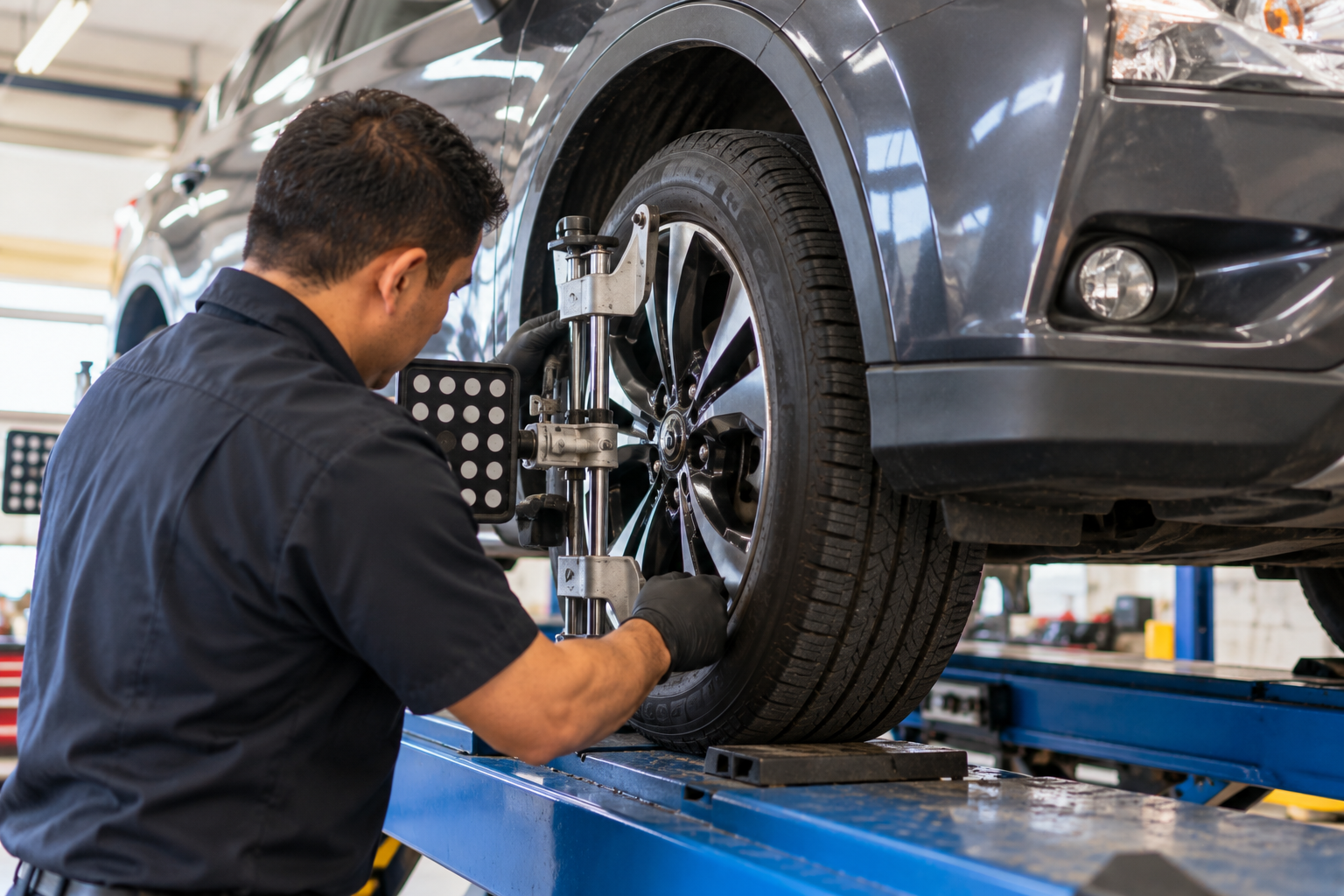
1. Wheel Alignment Problems
Wheel alignment refers to the angles at which your wheels are positioned relative to the vehicle and the road.
When those angles are outside the manufacturer's specifications, the vehicle may no longer track straight.
Common wheel alignment symptoms include:
- Persistent pulling toward one side
- An off-center steering wheel
- Uneven tire wear
- Changes in steering response
Alignment problems can develop over time or follow an impact with a pothole or curb.
For Oahu drivers, noticing a change in how the vehicle tracks after a road impact is a good reason to arrange an inspection.
However, a car pulling to one side doesn't automatically mean its alignment is incorrect. Tire and brake problems can produce similar symptoms.
2. Uneven Tire Pressure
Before assuming your vehicle needs an alignment, consider the condition and inflation pressure of its tires.
If one tire is significantly underinflated compared with the tire on the opposite side, it can affect how the vehicle rolls and handles.
For example, a front tire with lower pressure may contribute to a pulling sensation.
Other clues include:
- A tire pressure warning light
- Noticeably different tire pressures
- Changes in steering feel
- Pulling that appeared after a tire lost air
Check your tire pressures when the tires are cold, using the manufacturer's recommended values on the vehicle's tire information placard.
Don't use the maximum pressure printed on the tire sidewall as the normal inflation target.
If the vehicle continues pulling after the pressures are corrected, another issue may be responsible.
3. Uneven Tire Wear or Tire Problems
Tire condition can also influence how straight a vehicle travels.
Uneven tread wear, internal tire defects, or differences between tires may cause the vehicle to favor one direction.
You might notice:
- More wear along one edge of a tire
- Irregular tread patterns
- Pulling that began after a tire replacement
- A change in pulling after tire rotation
Tire wear can sometimes be a consequence of an alignment or suspension problem rather than the original cause.
That's why correcting the alignment without identifying the reason for unusual tire wear may not fully resolve the concern.
4. Brake Problems
If your car pulls to one side when braking, the braking system deserves particular attention.
When you press the brake pedal, the brakes should apply stopping force in a controlled, balanced way.
If one brake is applying more or less force than expected, the vehicle may pull toward one side.
Potential causes include:
- A sticking brake caliper
- Brake pads wearing unevenly
- Problems with caliper slides or related hardware
- Other hydraulic or mechanical brake system issues
A sticking caliper can sometimes keep a brake partially engaged even when you're not pressing the pedal.
That may cause additional symptoms, including unusual heat, a burning smell, or pulling during ordinary driving.
If the pulling becomes strong when braking or the vehicle doesn't stop normally, don't continue driving. Stop in a safe location and arrange professional assistance.
At Pearl City Auto Works, we provide brake system maintenance and repair to help identify and address problems involving brake pads, calipers, rotors, and related components.
5. Worn Steering or Suspension Components
Your steering and suspension systems help control wheel movement and maintain stable contact with the road.
When components become worn or damaged, the wheels may not remain positioned as intended.
Possible contributors include:
- Worn tie rod ends
- Damaged control arm bushings
- Worn ball joints
- Other loose or damaged steering and suspension components
Along with pulling, you may notice clunking noises, loose steering, unusual tire wear, or changes in how the vehicle responds over bumps.
These symptoms are particularly important after a hard pothole or curb impact.
If a component is loose or damaged, an alignment alone won't correct the underlying mechanical problem.
Our steering repair services can help address steering-related issues identified during an inspection.
Does a Car Pulling to One Side Always Mean It Needs an Alignment?
No. An alignment may be the right solution, but it depends on what's causing the pulling.
Wheel alignment is often associated with vehicles that drift left or right, but the same symptom can also result from tire problems, uneven braking force, or worn steering components.
For example:
- If tire pressure is causing the pull, correcting the pressure may resolve it.
- If a tire has an internal defect, an alignment won't repair the tire.
- If a brake caliper is sticking, the brake problem needs attention.
- If a steering or suspension component is damaged, that issue may need to be repaired before alignment adjustments are made.
An inspection helps distinguish these possibilities rather than assuming one service will fix every pulling complaint.
Warning Signs That Your Vehicle Needs an Inspection
If your car consistently pulls to one side, it's worth having the cause checked before the problem becomes more noticeable.
Arrange an inspection if:
- You regularly need to correct the steering to stay in your lane.
- Your steering wheel is no longer centered when driving straight.
- Your tires are wearing unevenly.
- The pulling started after a pothole or curb impact.
- You hear clunking noises or notice looseness in the steering.
- Your vehicle pulls when you apply the brakes.
When Is Pulling a More Urgent Safety Concern?
Some symptoms require more immediate attention.
Stop driving when safe and arrange professional assistance if you notice severe or sudden pulling, difficulty maintaining control, significantly reduced braking performance, or a strong burning smell near a wheel.
The same applies if the steering suddenly becomes unusually loose or difficult to control.
Avoid testing a severely pulling vehicle at higher speeds to see whether the problem gets worse.
What to Expect During an Inspection at Our Aiea Shop
When you bring your vehicle to Pearl City Auto Works, we'll want to understand exactly what you've noticed.
Helpful details include whether the car pulls left or right, whether it happens during braking, and whether the issue started after a road impact or recent tire service.
Depending on the symptoms, the inspection may involve evaluating tire condition, steering and suspension components, brakes, and wheel alignment.
Our goal is to identify the source of the problem rather than assume every pulling complaint requires the same repair.
We'll explain our findings and discuss any recommended work before proceeding with repairs that require your authorization.
Get Your Car Checked at Pearl City Auto Works in Aiea
If your car is pulling to the left or right, don't assume it's something you simply have to get used to.
Whether the cause involves wheel alignment, brakes, steering, suspension, or tires, understanding the problem is the first step toward restoring predictable handling.
At Pearl City Auto Works, we help drivers in Aiea, Pearl City, and surrounding Oahu communities with automotive diagnostics, maintenance, and repairs.
If you've noticed persistent pulling, unusual steering behavior, or changes in how your car responds when braking, contact our team to discuss an inspection.
CONTACT US TODAY!BOOK A NO-CONTACT APPOINTMENT