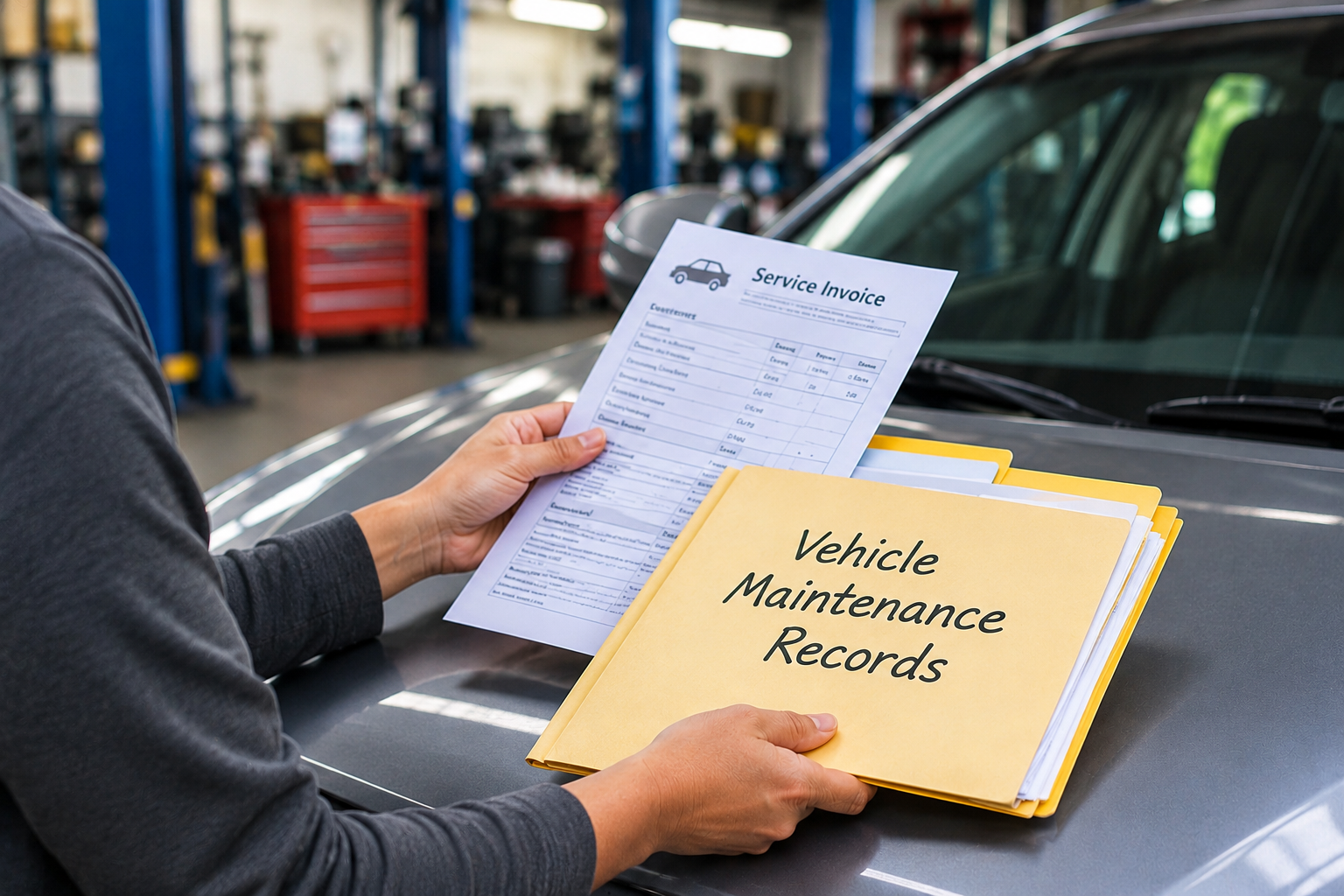
When was your last brake service? Was your battery replaced two years ago or four? Did the previous owner change the transmission fluid?
Without maintenance records, even simple questions about your vehicle can become difficult to answer.
Car maintenance records are documents showing what work was performed on your vehicle, when it was completed, and at what mileage. Keeping them organized helps you track completed services, identify maintenance that may be due, and provide useful information when a problem develops.
At Pearl City Auto Works, we help drivers from Aiea, Pearl City, and surrounding Oahu communities understand their vehicle's maintenance and repair needs.
Here's which records to keep, how to organize them, and how to use your service history when planning future maintenance.
The Car Maintenance Records Worth Keeping
You don't need a complicated filing system. The most useful maintenance history clearly shows what happened to your vehicle over time.
Start by saving these documents:
| Record | Why it matters |
|---|
| Oil change receipts | Shows service dates, mileage, and oil specifications when recorded |
| Brake service invoices | Identifies previous brake repairs and replaced components |
| Tire and alignment records | Helps track tire maintenance, replacements, and alignment work |
| Battery replacement receipts | Records battery age and previous replacement |
| Fluid service records | Shows when transmission, brake, coolant, or other fluids were serviced |
| Diagnostic reports | Preserves previous findings and symptoms |
| Major repair invoices | Documents replaced parts and significant repairs |
| Inspection reports | Provides a record of observed vehicle conditions |
| Warranty paperwork | Helps establish applicable coverage and requirements |
Keep the complete invoice when possible, not just the payment receipt.
An invoice may identify the vehicle, mileage, work performed, parts installed, and recommendations for future attention.
A credit card statement confirms payment but generally doesn't explain which maintenance services were completed.
For important repairs, keep the written estimate and final invoice together.
Why Maintenance History Matters for Oahu Drivers
Oahu driving conditions can influence how vehicle components age.
Coastal air can contribute to corrosion, while heat, humidity, and stop-and-go traffic can place additional demands on certain systems.
However, these conditions don't establish a universal maintenance schedule. Your manufacturer's recommendations, driving habits, vehicle age, and actual component condition should guide service decisions.
Avoiding Unnecessary Repeat Maintenance
Suppose you purchased a used vehicle and can't remember whether the coolant was recently replaced.
Without documentation, you may need additional inspection or testing before deciding what service is appropriate.
An invoice showing the coolant service date, mileage, and fluid used can help answer that question.
The same principle applies to brake fluid, transmission maintenance, and other services that may not leave an obvious visual record.
Recognizing Maintenance Gaps
A service history can reveal long intervals between documented oil changes, missing fluid services, or repeated repairs to the same system.
These gaps don't automatically mean a vehicle has been neglected. Records may be incomplete, especially when work was performed by several shops.
Instead, treat missing information as a reason to ask questions and assess the vehicle's current condition.
Previous diagnostic reports can also provide useful background when a warning light or unusual symptom appears, although a new problem may have a different cause.
How to Organize Your Vehicle's Service History
The best system is one you'll maintain after every appointment.
You can keep paper records, digital copies, or both.
Option 1: A Dedicated Maintenance Folder
Store invoices, inspection reports, warranty documents, and service notes in one folder.
Arrange them by date, with the newest records at the front.
If you own more than one vehicle, use a separate folder for each.
Option 2: A Digital Maintenance Folder
Photograph or scan each document and save it in a folder named for the vehicle.
Use consistent file names, such as:
2026-08-15_45000mi_Brake-Service.pdf
This makes it easier to find specific repairs without opening every file.
Back up important records so they aren't lost when you replace a phone or computer.
Option 3: A Simple Maintenance Spreadsheet
A spreadsheet can provide a quick overview of completed services.
| Date | Mileage | Service performed | Next step |
|---|
| Jan. 12, 2026 | 38,200 | Oil and filter change | Follow manufacturer guidance |
| Apr. 8, 2026 | 41,600 | Battery replacement | Retain warranty paperwork |
| Aug. 15, 2026 | 45,000 | Brake inspection | Review documented recommendations |
Example entries only; not a recommended maintenance schedule.
Record the shop's name and invoice number if you want to make documents easier to locate.
Tracking Maintenance Without Relying on Mileage Alone
Mileage is useful, but it doesn't tell the entire story.
Some maintenance intervals depend on time, mileage, or whichever comes first. Other services depend on inspection results or actual vehicle condition.
A car that travels relatively few miles may still need attention to aging fluids, rubber components, or other time-sensitive items.
Meanwhile, a higher-mileage vehicle with consistent maintenance records may have a clearer service history than a lower-mileage car with little documentation.
Use Your Owner's Manual as the Starting Point
Check your manufacturer's maintenance schedule for the correct requirements.
Pay attention to any separate recommendations for severe operating conditions when those conditions apply to your driving.
Avoid treating generic mileage intervals as universal rules.
Separate Completed Work From Recommendations
Your records should distinguish between:
- Completed services: Work already performed and documented.
- Recommended maintenance: Work suggested for future consideration.
- Unresolved concerns: Symptoms or findings that still require evaluation.
This prevents a recommendation on an old inspection report from being mistaken for a completed repair.
It also makes your records more useful during future service appointments.
Using Maintenance Records When Buying a Used Car
A vehicle's service history can be especially valuable when you're considering a used-car purchase.
Ask the seller for available maintenance invoices, major repair documentation, and records of scheduled services.
Look for consistency rather than expecting every oil change receipt to be present.
For example, documented timing belt replacement may be important on a vehicle whose manufacturer specifies that service. Without a record, you may need to verify the component's condition or plan maintenance accordingly.
Likewise, a history of repeated overheating repairs deserves further investigation before purchase.
Remember that records aren't a substitute for evaluating the vehicle itself.
A car can have extensive documentation and still develop mechanical problems. Another vehicle may have incomplete records but be in good condition.
Use the history as one source of information alongside an appropriate inspection.
Keeping Records After Major Repairs
Major repairs deserve more detailed documentation than routine maintenance.
Keep the original estimate, final invoice, diagnostic findings, and any applicable written warranty terms.
If a significant component was replaced, note the date, mileage, and part description.
You should also save documentation of any follow-up inspection or related repair.
This information can help if the same symptom returns or another technician needs to review previous work.
Don't assume a previous repair guarantees that an entire vehicle system is problem-free. A new symptom may involve another component or an unrelated issue.
Bringing Your Maintenance Records to Pearl City Auto Works
When scheduling service, you don't need to bring years of paperwork.
Start with the records most relevant to your current concern.
For routine maintenance, have your recent service history and any recommendations you're unsure about available.
For a recurring problem, keep the invoice from the previous repair, relevant diagnostic reports, and a description of what you've noticed.
When you contact our Aiea team, let us know what maintenance records you have and what concerns you'd like us to address. We can discuss the appropriate next steps for your vehicle.
At Pearl City Auto Works, we offer factory-recommended maintenance, oil changes, brake repair, engine diagnostics, steering and suspension work, and other automotive services.
We also offer a Free Courtesy Check Over by appointment. This courtesy digital inspection can help identify visible vehicle concerns, but it doesn't replace diagnostic testing when a specific problem requires further investigation.
Ready to Plan Your Next Maintenance Visit?
Have your recent service records available when you contact us. We can discuss your vehicle's current concerns and help you plan an appropriate maintenance appointment at our Aiea shop.
VIEW OUR AUTO SERVICES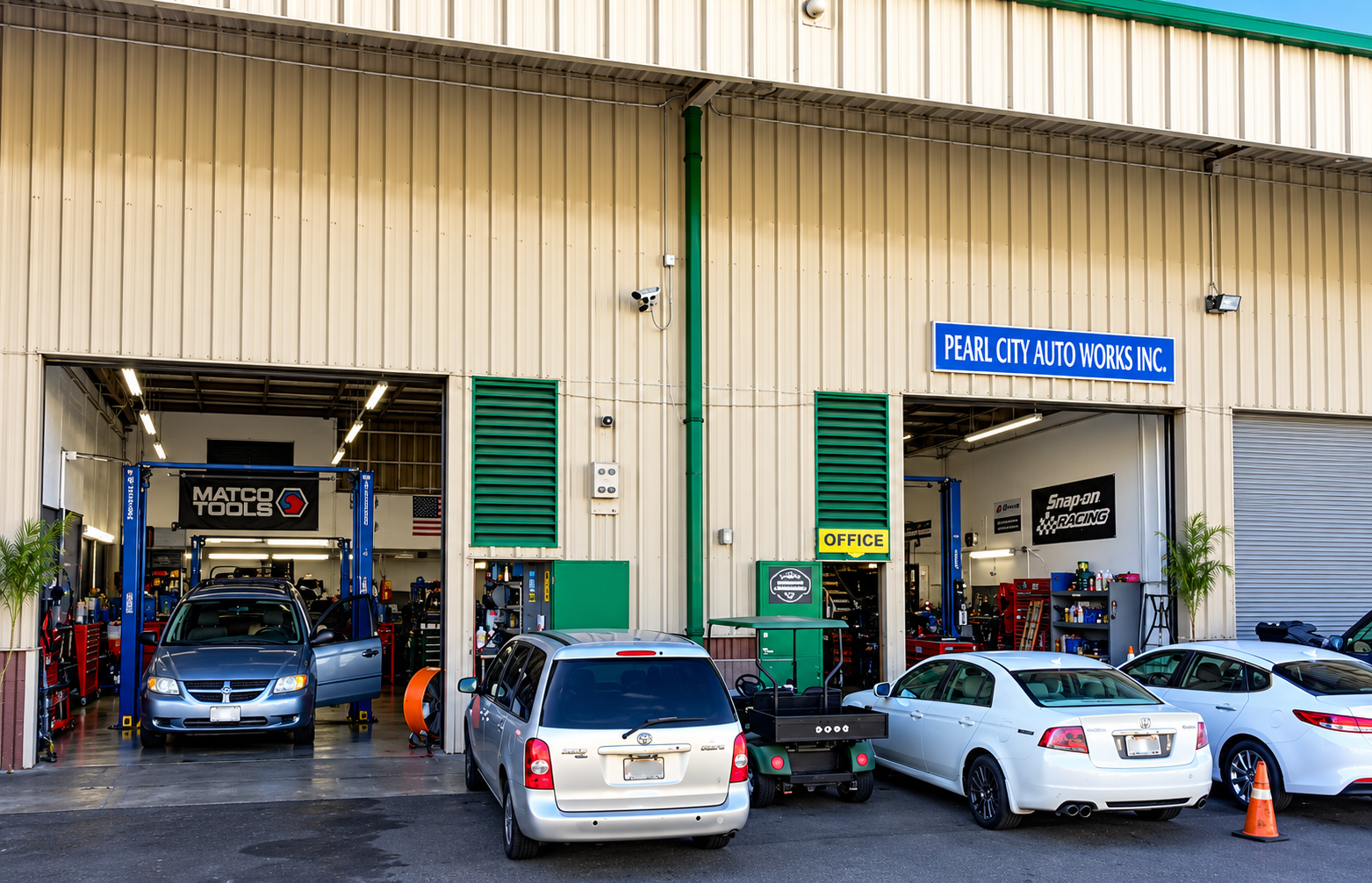
What Local Oahu Drivers Are Saying
Clear explanations can help drivers make more informed decisions about vehicle maintenance.
"Honest mechanics that try to find the best deal on parts, not just go straight to the dealer."
Jacob Wernicke, Local Customer
“Been going to this place for service for over 15 years.”
Thomas Arnone, Local Customer
These comments reflect customer experiences and aren't claims about maintenance record storage or access.
Make Your Next Maintenance Visit More Informed
You don't need a perfect service history to take better care of your car.
Start by saving your next invoice, recording the mileage, and keeping future maintenance recommendations separate from completed work.
Over time, those records can help you recognize maintenance gaps, explain previous repairs, and make better-informed service decisions.
At Pearl City Auto Works, we help Oahu drivers understand their vehicle's condition and maintenance needs.
If you're unsure what service your vehicle may need next, contact our Aiea team to discuss an appointment.
CONTACT US TODAY!BOOK A NO-CONTACT APPOINTMENT