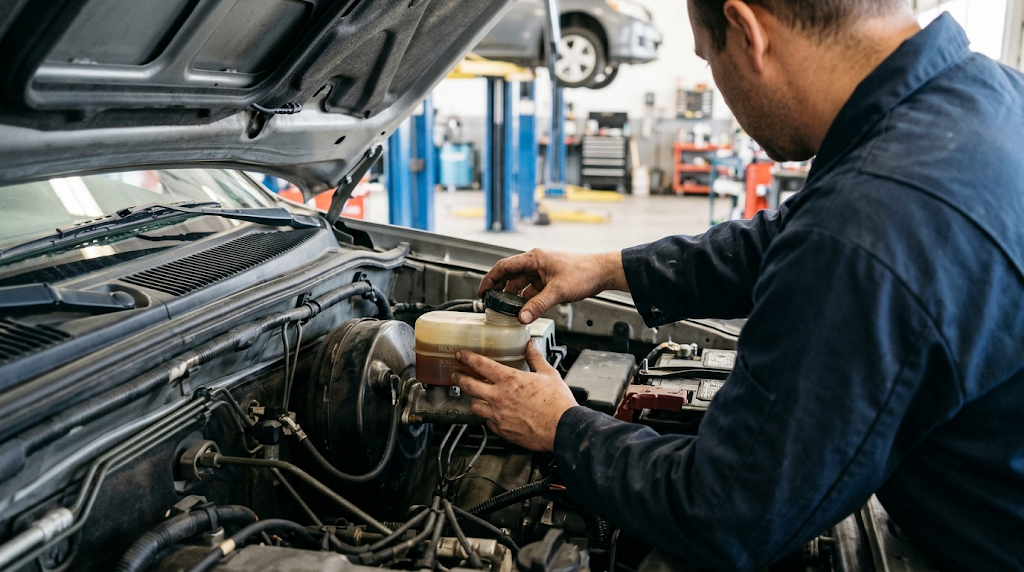
Your brakes may feel completely normal even when your brake fluid is due for replacement. Unlike brake pads, which wear down through use, brake fluid can deteriorate over time without obvious warning signs.
Brake fluid absorbs moisture as it ages. This can lower its boiling point and contribute to corrosion inside the hydraulic braking system.
At Pearl City Auto Works, we provide brake system maintenance and repair for drivers in Aiea, Pearl City, and surrounding Oahu communities. If you are unsure when your brake fluid was last changed, we can help you determine whether service is due.
Why Brake Fluid Needs to Be Changed
Brake fluid transfers hydraulic pressure when you press the brake pedal, allowing the braking system to apply force at the wheels.
Most passenger vehicles use glycol-based brake fluids, such as DOT 3 or DOT 4. These fluids gradually absorb moisture, even when a vehicle is driven infrequently.
Moisture contamination can affect braking performance in two ways:
- Lower boiling point: Repeated braking generates heat. Moisture-contaminated fluid can vaporize under sufficiently high temperatures, interfering with hydraulic pressure.
- Internal corrosion: Moisture can contribute to corrosion inside brake lines, calipers, and other hydraulic components.
These changes may develop without noticeable symptoms.
Replacing aged fluid helps maintain the hydraulic system, but it will not repair worn brake pads, damaged components, or hydraulic leaks.
Recommended Brake Fluid Replacement Intervals
There is no universal replacement interval for every vehicle. Your manufacturer's maintenance schedule should be the primary reference.
Some manufacturers specify time-based intervals, while others recommend inspections or different maintenance schedules.
Several factors can help determine whether service is needed.
| Factor | Why It Matters |
|---|
| Manufacturer's schedule | Establishes the recommended service interval |
| Last replacement date | Helps identify overdue maintenance |
| Vehicle age | Brake fluid can absorb moisture regardless of mileage |
| Fluid condition | Contamination may indicate replacement is necessary |
| Service history | Missing records may justify a professional assessment |
Brake Fluid Maintenance in Hawaii's Climate
Oahu's humidity makes moisture an important consideration when maintaining a vehicle's braking system.
Conventional brake fluid gradually absorbs moisture, even when a vehicle is driven infrequently.
Stop-and-go traffic and repeated braking on steep roads can also place additional heat demands on the braking system.
However, Hawaii's climate alone does not establish a shorter replacement interval for every vehicle. Following manufacturer recommendations remains the best starting point.
Signs Your Brake Fluid or Hydraulic System Needs Attention
Brake fluid deterioration does not always produce noticeable symptoms. Checking maintenance records is often more useful than waiting for braking performance to change.
Still, certain conditions warrant attention.
Unknown Service History
If you cannot remember when the brake fluid was last replaced, review your maintenance records and manufacturer's schedule.
This is particularly useful when purchasing a used vehicle with incomplete service records.
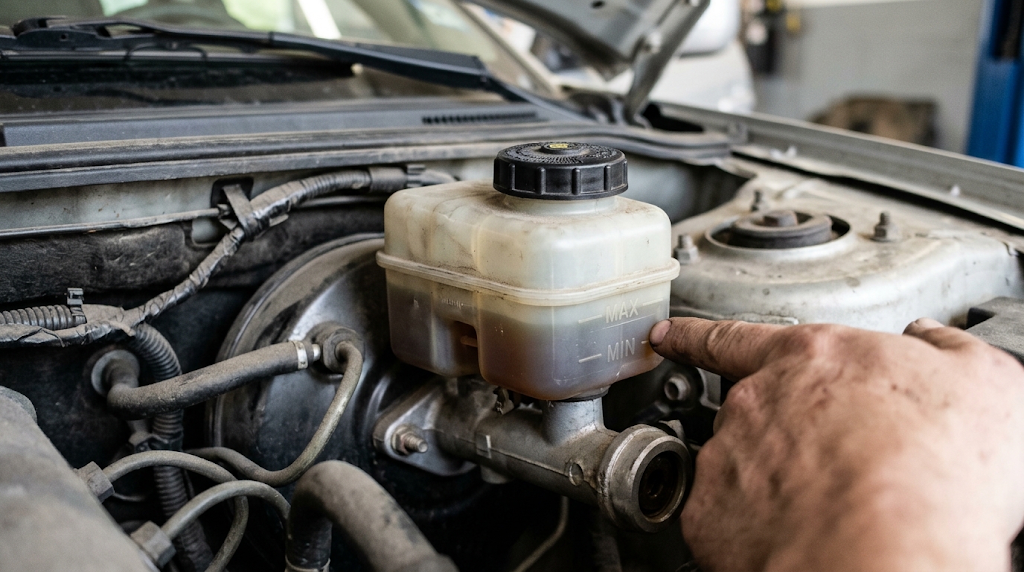
Contaminated Brake Fluid
Brake fluid may darken with age, but color alone does not reliably indicate whether replacement is necessary.
Visible debris, cloudiness, or suspected contamination should be evaluated professionally.
Avoid opening the reservoir unnecessarily because dirt and moisture can enter the system.
Low Brake Fluid Level
A low fluid level may result from worn brake components, a hydraulic leak, or another condition requiring investigation.
It does not automatically mean the vehicle needs a brake fluid change.
A technician should determine the cause before additional fluid is added.
Changes in Brake Pedal Feel
A soft, spongy, or sinking brake pedal may indicate trapped air, a hydraulic leak, or another braking system problem.
These symptoms require diagnosis rather than assuming routine fluid replacement will resolve them.
If your braking performance has deteriorated or the pedal sinks toward the floor, stop driving and arrange professional assistance.
Our brake service and repair team can evaluate braking concerns and recommend the appropriate next step.
What to Expect During a Professional Brake Fluid Change
A professional brake fluid change involves replacing aged hydraulic fluid according to the vehicle manufacturer's requirements.
The exact equipment and procedure depend on the vehicle's braking system.
A typical service includes:
- Confirming fluid specifications: Identifying the correct brake fluid and applicable manufacturer procedures.
- Checking the hydraulic system: Looking for visible leaks, damage, or other concerns that may require attention.
- Replacing old fluid: Exchanging aged fluid using appropriate equipment and procedures.
- Bleeding the system: Following the required procedure to prevent trapped air from affecting hydraulic pressure.
- Checking operation: Verifying braking system operation according to the applicable service procedure.
Some vehicles require additional steps involving ABS or electronic braking components.
These are general professional service procedures, not a fixed process for every vehicle.
At Pearl City Auto Works, we review recommended repairs with customers before proceeding with authorized work. Our goal is to help you understand what needs attention and why.
Brake Fluid Change vs. Brake Repair
Brake fluid replacement is preventive maintenance. Brake repair addresses specific mechanical or hydraulic problems.
| Service | Purpose |
|---|
| Brake fluid change | Replaces aged or contaminated hydraulic fluid |
| Brake pad replacement | Addresses worn friction material |
| Rotor service | Addresses wear or damage affecting braking surfaces |
| Hydraulic repair | Corrects leaks or faulty hydraulic components |
| ABS diagnostics | Investigates anti-lock braking system faults |
For example, replacing brake fluid will not correct a leaking brake line or restore worn brake pads.
Identifying the actual problem helps ensure the recommended service addresses your vehicle's needs.
Frequently Asked Questions
1. What is the difference between DOT 3, DOT 4, and DOT 5 brake fluid?
DOT 3 and DOT 4 are glycol-based fluids with different performance specifications, including boiling points.
DOT 5 is silicone-based and should not be mixed with conventional glycol-based fluids. DOT 5.1, despite its name, is glycol-based.
Always use the fluid specification required by your vehicle manufacturer.
2. How much does a brake fluid change cost?
Pricing depends on the vehicle, required fluid, service procedure, and whether additional work is necessary.
Some vehicles require specialized procedures that affect labor requirements.
For pricing specific to your vehicle, contact our team with your make, model, and year.
3. Can different brands of brake fluid be mixed?
Brand alone does not determine compatibility. The fluids must meet the appropriate specifications and be compatible with the vehicle's braking system.
Do not assume different brake fluid types can be mixed. If you are uncertain about the existing fluid, confirm the manufacturer's requirements before adding anything.
4. What happens if the wrong liquid enters the brake fluid reservoir?
Water, oil, or another incompatible liquid can contaminate the hydraulic system and potentially damage components.
If you suspect contamination, do not drive the vehicle until it has been professionally assessed.
Depending on the substance involved, replacing the fluid alone may not be sufficient.
5. Can brake fluid damage vehicle paint?
Yes. Many conventional glycol-based brake fluids can damage automotive paint and certain finishes.
Avoid spills when handling brake fluid. If a spill occurs, follow the vehicle and fluid manufacturer's cleaning guidance promptly.
Brake fluid should also be handled carefully to avoid skin and eye contact.
Schedule Your Brake Fluid Service in Aiea
Brake fluid maintenance is easy to overlook because deterioration may not produce noticeable symptoms.
If your replacement interval is approaching, your service history is unclear, or you have concerns about your braking system, our team can help you understand the appropriate next step.
We provide brake maintenance and repair at our Aiea shop. We also offer a Free Courtesy Check Over by appointment, with digital inspection information to help you understand your vehicle's condition. This does not replace specialized brake diagnosis.
Loaner vehicles may be available, and shuttle service to neighboring towns is offered. Please confirm arrangements when scheduling.
Pearl City Auto Works
98-025 Hekaha St, Aiea, HI 96701
Phone: (808) 201-7272
CONTACT US TODAY!BOOK A NO-CONTACT APPOINTMENT